Malta is about 27 km long, so no base is genuinely remote from anything else – but the area you pick still decides how the trip feels. Sliema is the right answer for most independent travellers: a seafront promenade, the best mid-range restaurant spread on the island, and a ferry to Valletta that beats every bus route.
The others are specialists. St Julian's for nightlife and big hotels, Valletta for culture, Buġibba for budget, Mellieħa for beaches. Here is how they actually compare.
The five areas at a glance
| Area | Best for | Beach | Need a car? |
|---|---|---|---|
| Sliema | Most trips – balance, ferry, restaurants | Rocky lidos only | No |
| St Julian's | Nightlife, big hotel pools | Rocky, small | No |
| Valletta | Culture-first short breaks | None | No |
| Buġibba / St Paul's Bay | Budget, Blue Lagoon boats | Small, rocky | No |
| Mellieħa | Beaches and families | Malta's biggest sand | Helpful |
If you cannot decide, book Sliema. It is the base people most often wish they had picked, and the one they least often regret.
What separates them
The bus network covers Sliema, St Julian's, Valletta and Buġibba well enough to reach the main sights without a car. For the north and the south – Marsaxlokk, the Blue Grotto, Golden Bay – public transport takes considerably longer, and hiring a car for a day or two changes the trip more than the base does.
On price, Buġibba is consistently the cheapest. Valletta's boutique guesthouses and Sliema's mid-range strip sit broadly level, while St Julian's spans hostels to five-star. The north – Mellieħa, Qawra, Buġibba – is where most of the best all-inclusive resorts in Malta are.
Unless you are counting every euro, the gap between Sliema and St Julian's will not decide the trip – the atmosphere will.
Once you have settled on an area, the best hotels in Malta guide picks the standout properties in each – peak-summer rooms in Sliema and the northern resorts go earliest, so lock a date in as soon as the area is decided.
Sliema: the default, and usually the right one
Sliema sits on a peninsula across Marsamxett Harbour from Valletta, and the logistics explain its popularity. The waterfront promenade runs about 3 km, lined with restaurants, cafés and shops that stay open in the evening.
There is no sandy beach – the shoreline is rocky shelves and private lidos – but the swimming is fine and the location does the heavy lifting.
The Valletta ferry is the reason to stay here. It crosses in about seven minutes and costs €3.00 single or €5.00 return, rising to €3.50 and €5.20 after 19:30. That is faster than any bus and gives you a harbour view no road matches.
Mid-range international hotels sit alongside smaller boutique options, and a few offer a private or plunge pool. The area is alive after dinner without tipping into noise – you can have a late evening here and still sleep.
St Julian's: nightlife, variety and the biggest hotels
St Julian's tips further towards activity. Paceville, at its northeastern edge, is Malta's most concentrated nightlife district – clubs and bars running until around 04:00, busy well into the week in season.
Most of the large chain hotels are here – the Westin Dragonara, Hilton Malta, Marriott – which means proper pools, spas and a price range from hostels to five-star.
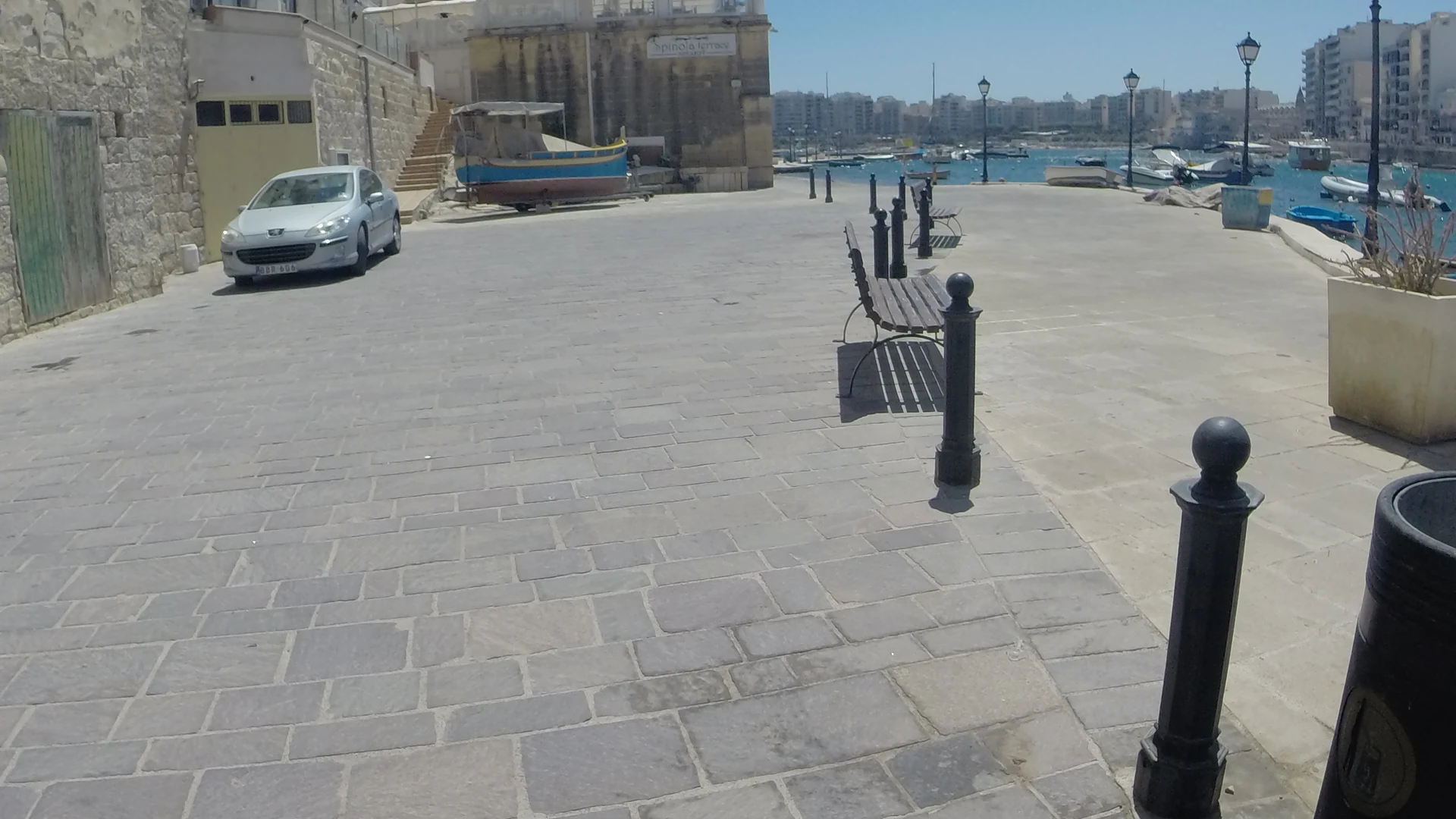
Spinola Bay is the better half of St Julian's for most visitors: the quieter inlet between Sliema and Paceville, with painted boats on the water, a short strip of good seafood restaurants and rooftop bars that do not require a club door. Several of the best adults-only hotels in Malta sit around here and further up the coast.
Book here if you want a bay view and a hotel pool within walking distance of the clubs. Book Sliema instead if you would rather not hear music at midnight – and note that two streets from Paceville is close enough to hear it.
Valletta: atmosphere and walkability
Valletta is one of Europe's smallest capitals and among the most densely packed with things worth looking at. The Grand Harbour, St John's Co-Cathedral and the Upper Barrakka Gardens are all within about fifteen minutes on foot of any guesthouse inside the walls.
The trade-off is the evening. Valletta empties by about 21:00 on most weeknights – restaurants close earlier than in Sliema, the streets go quiet, and late dining options thin out sharply.
Hotel stock is boutique guesthouses and a few mid-range options, with no large resorts. For a focused cultural break of three or four days it is an excellent base. For a mixed trip where beach days and late dinners matter equally, the commute back starts to count. Our things to do in Valletta guide covers what to plan around if you do stay inside the walls.
Buġibba and St Paul's Bay: the budget option
Buġibba is Malta's package-holiday hub – a dense grid of mid-range and budget hotels, a bus-heavy seafront and an entertainment strip that prioritises volume over polish. It is the cheapest area on the island and honest about what it is.
One genuine advantage: the Blue Lagoon boat trips from Buġibba Jetty are among the best-value and longest-running departures in Malta. If a Comino Blue Lagoon day is high on your list, you can walk to the boat from most hotels here.
The beach situation is limited – small rocky areas and lidos rather than a proper bay. Buġibba suits a tight budget that wants a base, a pool and a bus stop more than atmosphere. Independent travellers who have done the research usually prefer Sliema for a similar price.
Mellieħa: stay here for the beaches
Mellieħa in the northwest is a different calculation entirely. Mellieħa Bay is the largest sandy beach in Malta – wide, calm and shallow enough for young children – and the town sits on a ridge above it with a slower pace than the resort strip below.
Golden Bay is about 15 minutes away by car, family-friendly Popeye Village is along the coast at Anchor Bay, and the Ċirkewwa ferry terminal for Comino and Gozo is a five-minute drive – the shortest crossing point on the island.
The distance is the cost. Valletta is around 35–40 minutes by car and closer to an hour by bus. Without a car, the south – Marsaxlokk, the Blue Grotto, Mdina – becomes a real commitment.
If your ideal Malta day means a beach in the morning and the old capital in the afternoon, you will spend the holiday in transit. For a beach-centred trip where history is the occasional excursion, Mellieħa is the best base on the island, and it holds most of the best family hotels in Malta with the big all-inclusive resorts and kids' clubs. Our things to do in Mellieħa guide covers the area in full.
So where should you book?
Sliema or St Julian's for a first trip – the ferry to Valletta, the best restaurant spread, easy beach-day buses, and as much or as little nightlife as you want.
Valletta only if the trip is genuinely about sights and culture, because the evenings are quiet and there is no beach. Mellieħa only if beaches lead the itinerary, and ideally with a car. Buġibba only if price is the deciding factor – budget here means budget in every sense.
Still working out the trip basics? The Malta first visit guide covers when to go and how long to stay, and the 3-day itinerary gives you a ready-made plan once the base is booked.
Featured image: Alan C. Bonnici / Wikimedia Commons / CC BY-SA 3.0