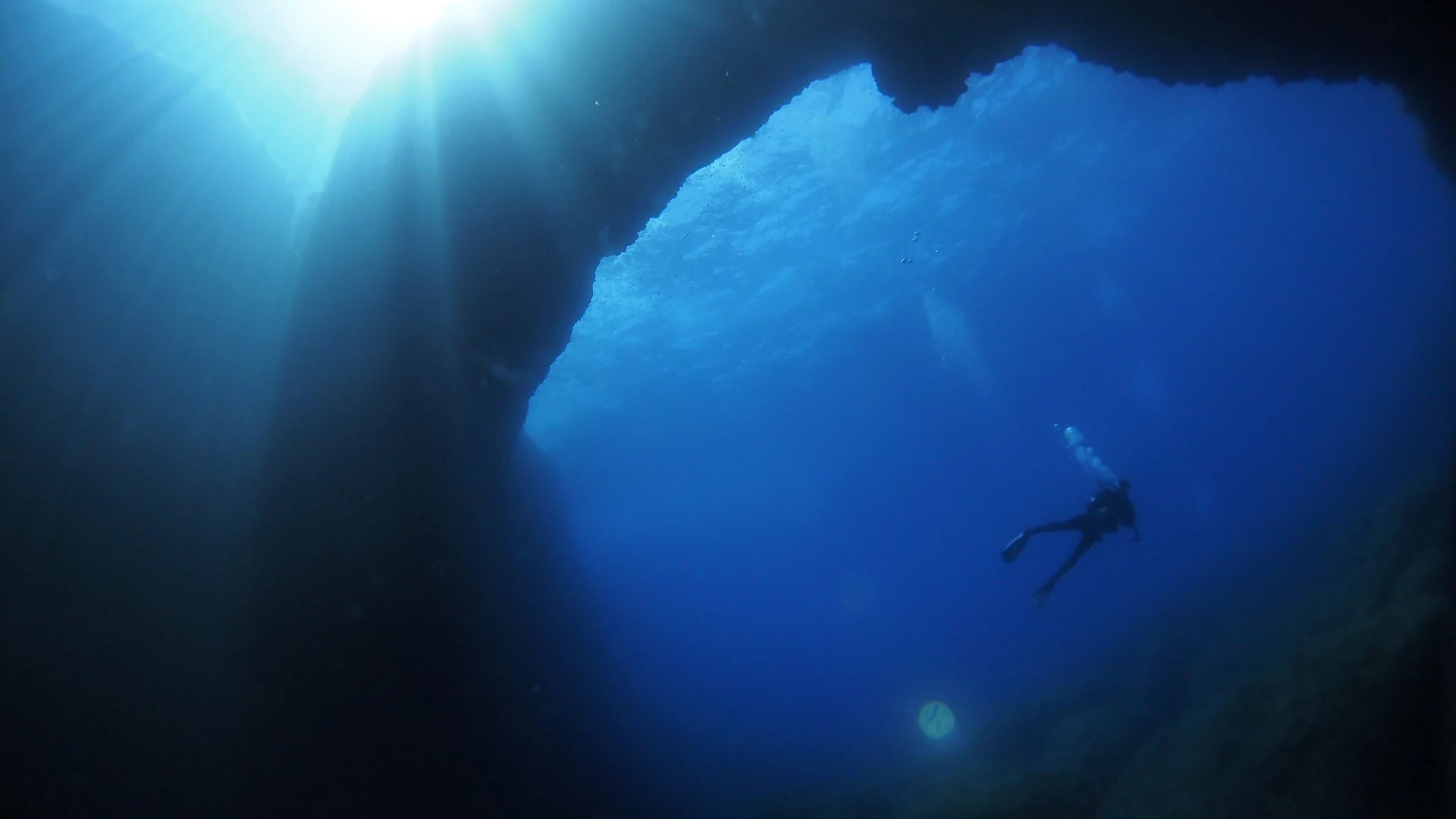
Malta sits in the middle of the Mediterranean with visibility that regularly runs to 30 metres, warm water from June to November and wrecks you can reach from the shore. A half-day beginner dive costs around €75–95 with gear and instructor included, and a full PADI Open Water course runs €350–430 at most centres.
Two things changed for 2026 and neither is well covered elsewhere. Għar Lapsi, long the easy south-coast shore entry, is closed for the year after Storm Harry destroyed the slipway in January. And Ċirkewwa is now a regulated marine park with anchoring restrictions. Below: what everything costs, the medical rule visitors get wrong, and which sites are actually open.
Malta: First Experience Scuba Diving Lesson
A half-day introduction from St Paul's Bay with no certification required: a shore briefing on kit and safety, shallow-water practice, then a guided dive to roughly 6–8 metres. Small groups and all equipment included.
- No experience or certification needed
- All equipment and instruction included
- Instructors in English, Italian, German and Spanish
What does diving in Malta cost in 2026?
Malta is mid-range for the Mediterranean: not the bargain it was a decade ago, but well under Red Sea resort pricing once you factor in how much of the good stuff is shore-accessible.
| What | Typical 2026 price |
|---|---|
| Discover Scuba / try-dive, half-day, gear included | ~€75–95 |
| Guided fun dive, certified divers, per dive | ~€35–50 |
| Full equipment rental, per day | ~€20–30 |
| PADI Open Water course, all-in | ~€350–430 |
| Guided snorkelling tour with gear, 2.5 hrs | ~€35 |
The Open Water spread is wide and it is worth understanding why. Budget centres in Mellieħa and St Paul's Bay run courses around €280–300, premium Sliema operators go up to about €420, and several Gozo schools sit at €460–495 because they build the qualifying dives around the island's better sites.
Atlantis Diving Centre on Gozo, New Dimension Scuba and ScubaMalta at Portomaso all publish current 2026 price lists, which makes them easy to compare. Ignore any price list dated 2022 or earlier that is still sitting online.
Do you need a medical certificate to dive in Malta?
No, not as a general rule, and this catches people out. Under Malta's current framework, recreational clients complete a PADI or SSI medical self-declaration at the dive centre. A doctor's written clearance is required only if you answer "yes" to something on that form, or if the dive director has a reason to doubt your fitness.
There is no blanket requirement for visitors to arrive holding a medical certificate. The annual medical you may read about applies to instructors and dive leaders working in Malta, not to you.
Two exceptions are absolute: diving is not permitted during pregnancy, and if the form flags a condition, get the clearance before you fly rather than losing a day of the trip to finding a doctor.
Which dive sites are open in 2026?
Most of them, but two carry changes worth planning around.
Ċirkewwa Marine Park is now a designated protected area under Legal Notice 51 of 2026. Anchoring is banned in the Posidonia seagrass zones, mooring buoys are mandatory, dive boats must pre-book, and patrols enforce it. Shore diving and snorkelling continue with minimal restriction, so the practical effect on visitors is small, but the old advice to anchor wherever you like is now simply wrong.
Għar Lapsi is closed for 2026. Storm Harry destroyed the slipway and access ramp in January; the government has committed €2 million to rebuilding and there is no reopening date. Do not plan a shore dive or snorkel there this year.
- Blue Hole, Dwejra (Gozo): the headline site, a circular pool linked to open water by an archway at 8 m, then a wall dropping to about 25 m. The Azure Window above collapsed in 2017; the Blue Hole itself is unaffected.
- Inland Sea, Dwejra: a sheltered lagoon joined to the open sea by a 70-metre tunnel through the cliff, divable and snorkelable.
- P31, Comino: a patrol boat at roughly 16–21 m, shallow enough for Open Water divers.
- HMS Maori, Valletta: a shallow wartime destroyer wreck at about 14 m, close enough to shore to reach without a boat.
- Um El Faroud, P29 and Rozi: the deeper wrecks at roughly 28–36 m, Advanced level and up.
Access to all of these is governed by your certification level rather than by closures. A Gozo dive school can usually arrange an 08:30 entry at the Blue Hole, which matters in July and August when leisure-boat traffic builds from mid-morning; the Gozo day trip guide covers the Ċirkewwa ferry.
Where can you snorkel without a boat?
Plenty of the coast works from the shore, and with Għar Lapsi out of action this year the alternatives matter more than usual.
- Għajn Tuffieħa and Golden Bay: the rocks at either end of the sand, not the sand itself.
- St Peter's Pool: deep, clear and rocky, best on a calm day.
- Anchor Bay: the cove below Popeye Village, sheltered and shallow.
- Mellieħa Bay: the rocky sections at the edges of the beach.
- Gnejna Bay: quieter than the big northern bays and good for a first attempt.
For something guided, the Aquatica snorkelling tour from Sliema runs two and a half hours along the coastline with gear included and a group capped at five, which is about as low-friction as an activity booking gets in Malta.
The Blue Lagoon needs no guide at all if you arrive by boat, and the visibility there is as good as anywhere on the islands. Note that stepping onto the shore needs a free pre-booked slot, which the Blue Lagoon guide explains in full.
When is the water warm enough?
The sea runs from roughly 15°C in February to 27°C in August, passing 22°C in June and 25°C in July. It holds at 20°C or above from June through to November, and that is the window where a wetsuit becomes optional rather than essential.
April to June is the sweet spot for diving: good visibility, fewer boats and no queues at the popular entries. August and September give the warmest water but the busiest sites, particularly around Comino and the south coast caves.
Winter diving is entirely normal here with a 7 mm suit or a drysuit. Snorkelling tours generally run April to October, and outside that window availability depends on the operator rather than the weather. If you are planning around temperature, our month-by-month temperature guide has the full picture.
Featured image: Mrcrycrash / Wikimedia Commons / CC BY-SA 4.0