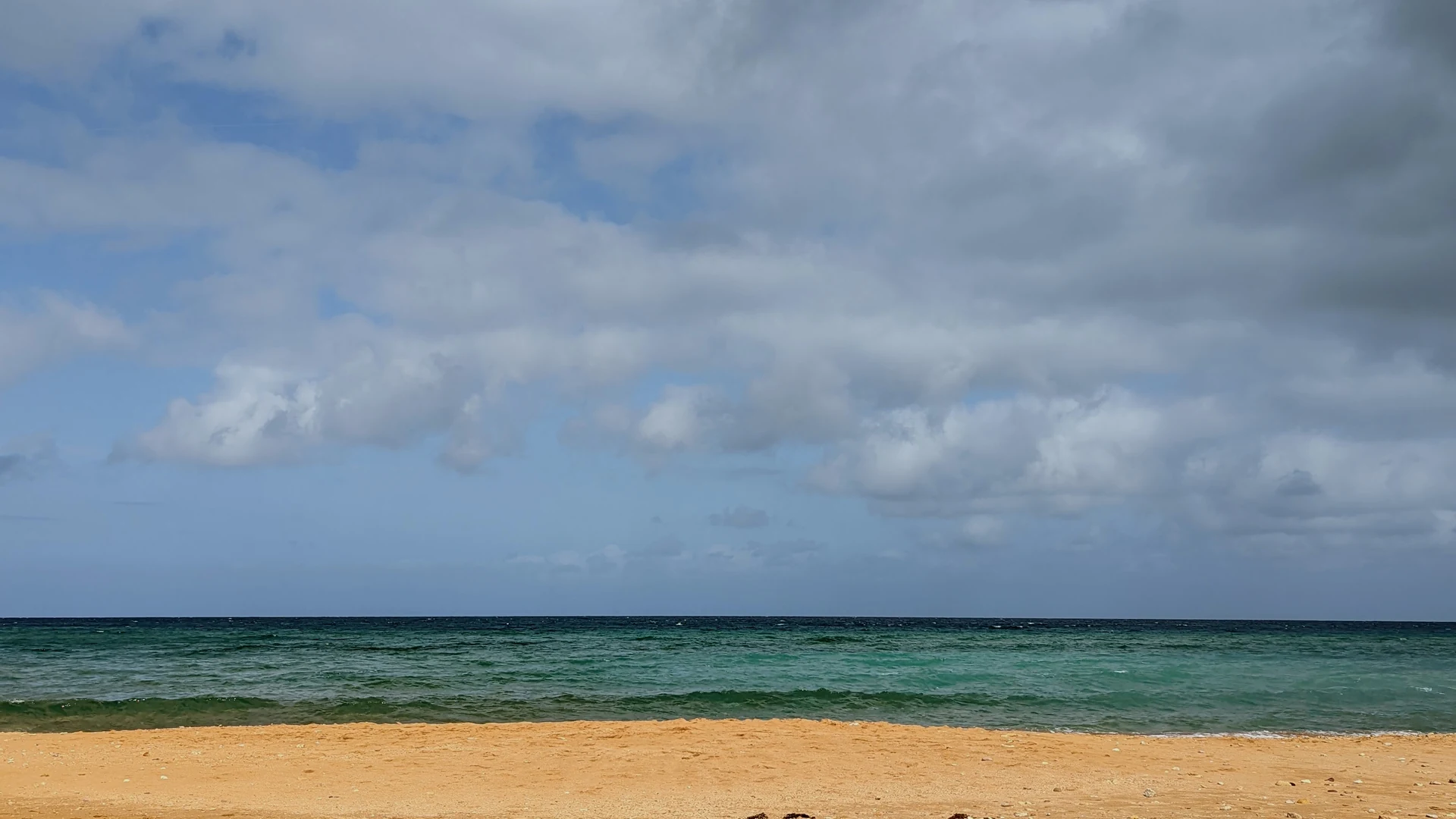
Ramla l-Ħamra – "the red sand" – is Gozo's biggest beach and the only one on the island that supports a full beach day. It is a broad orange-red crescent on the north coast, about 10 minutes by car from Victoria, and the colour is real: iron-rich minerals eroding out of the surrounding rock, not a trick of the light.
What most visitors miss is what sits behind the sand. The dune system at the back of the beach is a legally protected Natura 2000 habitat, which is the actual reason there is no café strip, no watersports school and no resort here. Facilities are thin by design, not by neglect – a seasonal kiosk, some sun-loungers, and that is it.
Why the sand is red, and why nothing is built behind it
The orange-red tone comes from iron-rich minerals in the rock that feeds the beach from the hillsides around it. It reads as ordinary gold sand in photographs taken at midday and as genuinely red in low light, which is one reason early morning and late afternoon are worth the effort here.
Behind the sand sits a rare sand-dune habitat protected under Maltese law as a Natura 2000 site. Dune systems of this kind are close to extinct across the Maltese islands, and this one survives because the valley behind Ramla was never developed.
The practical ask is simple and it is the one thing to get right: keep off the dunes. Walk the marked routes to and from the sand rather than cutting across the vegetation behind it. The plants holding those dunes together do not recover on a single-season timescale.
Buried in the same ground, behind the beach and under the bamboo, lie the remains of a Roman villa – a residential building once decorated with mosaics and marble. Set expectations before you go looking: there is very little to see above ground today, and it is a fact about the site rather than a sight to visit.
How do you get to Ramla Bay?
Ramla sits in a valley on the north coast, reached by a single road down from Xagħra.
| How | Route | Time | Notes |
|---|---|---|---|
| Car from Victoria | Down the valley road via Xagħra | ~10 min | The default if you have wheels on Gozo |
| Car from Mġarr ferry | Via Victoria | ~15 min | Your arrival point coming from Malta |
| Bus 322 | Mġarr ferry – Ramla – Xagħra – Marsalforn | ~15 min from Mġarr | Regular year-round route, not a seasonal shuttle |
Bus 322 is a proper Gozo bus route, not a summer-only service. It runs from around 05:55 to 22:25, roughly every 30–45 minutes for most of the day, and it puts Ramla within easy reach of the ferry without a car. Check Tallinja for the direction and hour you need, because the gaps stretch at either end of the day.
That matters more than it sounds. Ramla is one of the few Gozo beaches you can reach on public transport without a walk at the end of it – most of the island's other bays leave you a track or a climb from the nearest stop, as our best beaches in Gozo comparison sets out.
If you are coming over from Malta for the day rather than staying on Gozo, the ferry timings and island logistics are in our Gozo day trip guide.
Parking at Ramla Bay
The valley road runs down to a car park beside the beach, with free roadside parking along it and more spaces up on the main road. None of it is large.
- Peak season: fills through July and August – arrive early rather than assuming a space
- Overflow: roadside along the valley, then up on the main road, a 10–15 minute walk down
- Shoulder season: rarely a problem from October to May
- Surface: the valley road is narrow, so meeting a coach coming up is part of the experience
The Calypso Cave viewpoint
On the headland above the western end of the bay sits Calypso Cave – identified by local tradition, not by archaeology, as the cave where the nymph Calypso held Odysseus for seven years in Homer's Odyssey.
Two separate things, and visitors routinely conflate them. The cave entrance itself is closed on safety grounds after geological movement brought down boulders, and it has not reopened. The viewing platform on the headland above is open, and it gives the best elevated view of Ramla – the full arc of the bay, the red sand and the water in a single frame.
The path up from the beach takes about 15–20 minutes, or you can drive to the road above and walk a short distance. Go for the view, not for the cave, and you will not be disappointed.
Swimming, and when to go
Ramla faces north and is partly sheltered by the headlands on either side, so conditions stay calm through most of the summer. The sand shelves at a reasonable gradient and the water is clear, which makes it the best straightforward swim on Gozo.
Sea temperatures run about 20 °C in June and around 27 °C in August and September. September is the pick: the water is at its warmest and the day-trip crowd has thinned.
Early morning is the other answer. The day-trip boats from Malta land mid-morning, and Ramla is on almost every island itinerary, so the hours before they arrive are quiet ones. The low light on red sand is a real thing, not a photographer's cliché.
The beach has a seasonal bar and some sun-lounger hire in summer and nothing at all out of season. Bring water. If you are basing yourself on the island rather than day-tripping, our where to stay in Gozo guide covers the villages worth choosing between.
Ramla is Gozo's one genuine beach day, and it stays that way because the dunes behind it were never built on.
Come early or come in September, walk up to the viewpoint before you swim, keep off the dunes on the way in and out, and the Ġgantija temples are five minutes up the hill when you have had enough sun.
Featured image: John Cummings / Wikimedia Commons / CC BY-SA 4.0