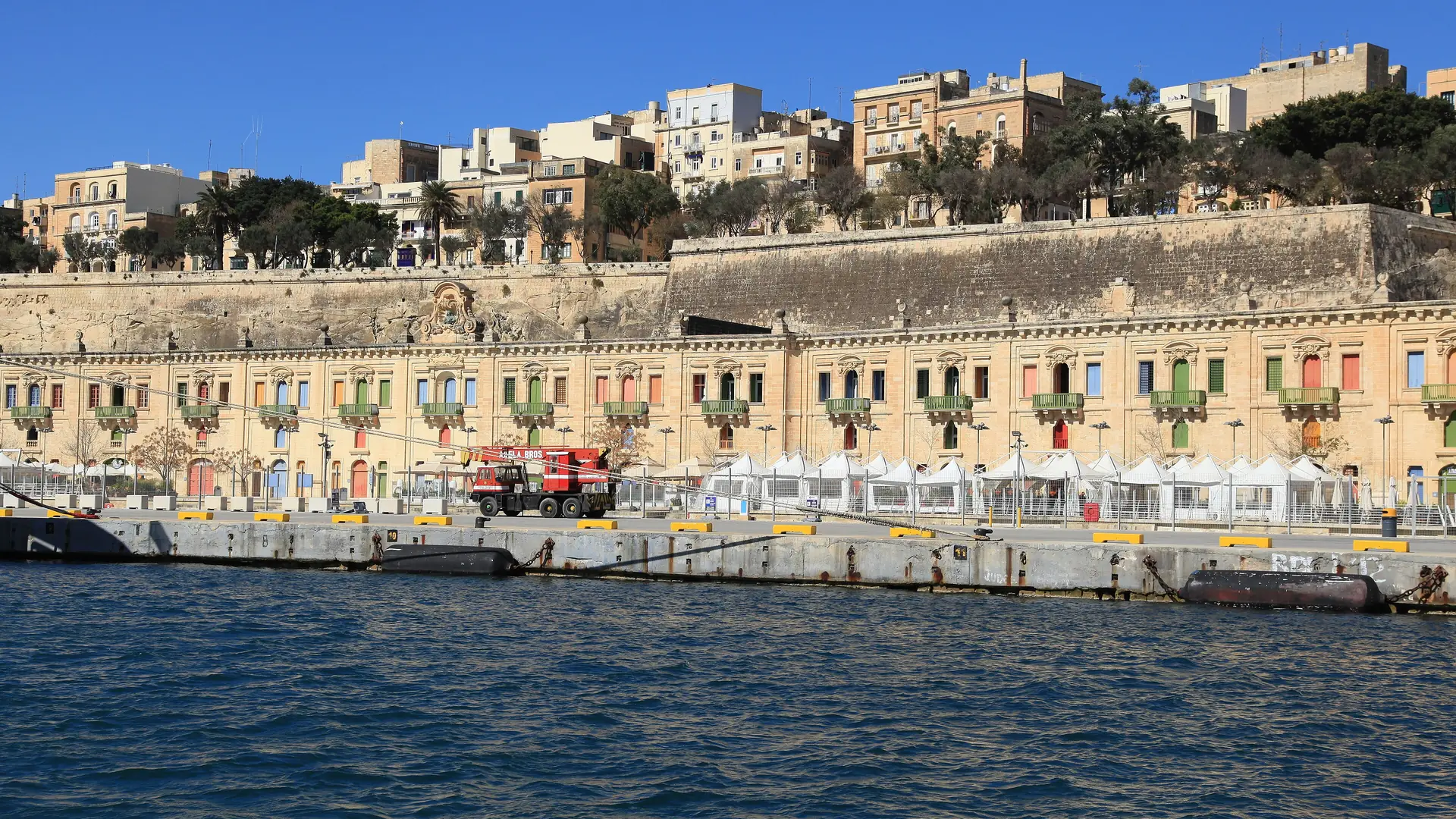
Malta is one of the safest countries in the EU: it ranks 12th in the world on the 2025 Global Peace Index, and the FCDO's advice is "take normal precautions" – the lowest tier, the same as France, Germany and Spain. Violent crime against visitors is genuinely rare, and emergency services run to EU standard in English on 112.
The honest version is that two things actually bite, and neither is crime. The sea is the real risk – riptides on exposed beaches have killed tourists – and opportunist theft is concentrated in a handful of predictable places. Everything else is the ordinary awareness you would bring to any European city.
How safe is Malta, really?
Malta placed 12th out of 163 countries on the 2025 Global Peace Index, slipping slightly from 10th the previous year and sitting around 7th in Europe. That is not a marketing line – it puts Malta ahead of most of the countries its visitors fly in from.
The FCDO rates Malta "take normal precautions", its lowest advisory tier, and that rating was reviewed in July 2026 without change. There is no Malta-specific elevated threat, and the EU-wide terrorism threat level applies here exactly as it applies to every other member state.
The most likely thing to happen to a visitor is a bag left unattended or a phone lifted off a café table. The island is small, heavily policed and economically dependent on tourism, which keeps the environment well managed in a way that is easy to feel within a day of arriving.
Emergency number 112, EU-standard hospitals, and police and medical staff who work in English. If you are planning a first trip, our Malta for first-timers guide covers the practical basics.
Is Malta safe right now, with the war in the Middle East?
Yes, and the answer is geography rather than reassurance. Malta sits in the central Mediterranean, roughly 1,900 km from Gaza and about 1,950 km from Israel. That is a long-haul flight's worth of sea and land in between.
The islands are not in the Middle East, not near any active conflict zone, and the FCDO has issued no Middle East-related travel advice for Malta.
The anxiety behind this question is usually a mental-map problem: "Mediterranean" gets filed alongside "Middle East". They are different ends of a very large sea.
What actually goes wrong in Malta
The risk picture is narrow and predictable, which is what makes it manageable.
| Risk | Where | How likely | What to do |
|---|---|---|---|
| Opportunist theft | Valletta's Republic Street, Sliema Ferries, crowded summer beaches, the Blue Lagoon on peak days | The most realistic risk | Bags zipped, no phone on the table, nothing valuable left on a towel |
| Riptides and currents | North-facing bays on rough days | Uncommon but the most serious | Do not swim on a rough day – move to the sheltered side of the island |
| Cliff-jump injury | St Peter's Pool, southern rock coves | Uncommon, avoidable | Feet first, only where others enter, never after storms |
| Card skimming | Standalone ATMs | Occasional | Use bank-branch machines |
| Unmetered airport taxi | Airport arrivals | Common annoyance | Fixed-fare booth or pre-booked transfer |
| Night-time trouble | Paceville, late | Rare, alcohol-related | Ordinary bar sense; the rest of the island is quiet |
Violent crime against tourists barely registers in any of this. The pattern is property, not people.
Petty crime and scams
Pickpocketing and bag theft are concentrated, not general. The hotspots barely change from year to year: Valletta's Republic Street, the Sliema Ferries area, crowded beaches in summer, and Comino's Blue Lagoon on a peak day. Walk two streets off any of those and the risk drops away.
Two scams are worth knowing by name. Unofficial "guides" work Mdina's main gate, attaching themselves to visitors and then asking for payment. And unmetered taxis operate at the airport – use the fixed-fare booth in arrivals or pre-book, which our Malta airport transfers guide compares on price.
Card skimming has occurred at some standalone ATMs. Use machines attached to bank branches where you can.
Is Malta safe for solo female travellers?
Malta rates well, and noticeably better than several of its Mediterranean neighbours. Street harassment and cat-calling exist but are markedly less common than in parts of southern Italy, Greece or Turkey, and the cities are compact and walkable enough that you are rarely far from other people or an open business.
The practical advice is unremarkable because it needs to be: lit streets after dark, particularly around Paceville, which gets loud and boisterous on weekend nights. Licensed taxis or a pre-booked ride rather than a lift from a stranger. Drink covered in bars.
Staying central makes solo travel easier here than almost anywhere. Sliema, St Julian's and Valletta all have busy seafronts, decent lighting, frequent buses and other travellers around at most hours.
The sea is the real risk
This is the part most safety guides underplay. Riptides on exposed beaches have caused tourist drownings in Malta, and the conditions that produce them are seasonal and predictable.
The gregale – the north-easterly wind that hits through winter and spring – is what turns north-facing bays dangerous. When it blows, the swell builds against exactly the beaches most visitors have on their list.
The rule is simple and it is not cautious advice, it is the advice: if the sea looks rough, swim somewhere else that day. Malta is small enough that the sheltered side of the island is always within half an hour, and the calm water genuinely is calm.
Cliff jumping needs the same discipline. At St Peter's Pool the ledges run from around 3 metres up to roughly 5–6 metres, with depth that varies across the pool and shifts after winter storms. Go feet first, jump only where you have watched someone else enter safely, and never straight after rough weather – our St Peter's Pool guide covers the site in detail.
The family beaches are a different proposition entirely. Mellieħa Bay and Golden Bay are both Blue Flag, sheltered, gently shelving and lifeguarded through the summer season. Jellyfish turn up along the coast in late summer, and are an irritation rather than a danger.
Driving, and getting around
Driving in Malta has a learning curve rather than a danger problem – narrow roads, confident local drivers, patchy signage and roundabouts treated as a contact sport. The accident rate is not dramatically above the EU average, and most visitors hire a car without incident. Our Malta car hire guide covers age limits, insurance and the local habits worth expecting.
Buses and ferries are safe and used heavily by tourists. The Sliema–Valletta crossing is one of the better short journeys on the island, and none of the public transport carries a safety caveat worth writing down.
Malta is a destination where safety needs very little active management: rank, advisory tier and crime pattern all point the same way, and the two genuine risks are a rough sea and an unzipped bag.
Watch the water rather than the headlines, keep your bag closed where the crowds are, and book the airport ride before you land. If cost is the next question, is Malta expensive breaks down what a trip actually runs to.
Featured image: Frank Vincentz / Wikimedia Commons / CC BY-SA 3.0