Malta sits in the middle of Europe's price range, and the gap between a cheap trip and an expensive one is almost entirely your own doing. Day to day it undercuts Italy, France and coastal Spain – a pastizz costs €0.50–1, a coffee about €2, a local beer €2–3 – but a peak-summer room in Sliema can cost more than everything else you spend that day combined.
Excluding flights and your room, budget roughly €50–80 a day per person at the shoestring end and €100–150 at a comfortable mid-range pace. So the honest answer is that Malta is not expensive, but August in a seafront hotel is. Here is exactly where the money goes, and which levers actually move it.
The short answer: is Malta expensive?
No – not by Western-European standards. Malta undercuts Italy, France and Spain's coastal resorts on the things you buy every day: coffee, a beer, a bus fare, a casual lunch. A main course that runs about €25 in a French bistro is closer to €12–15 here.
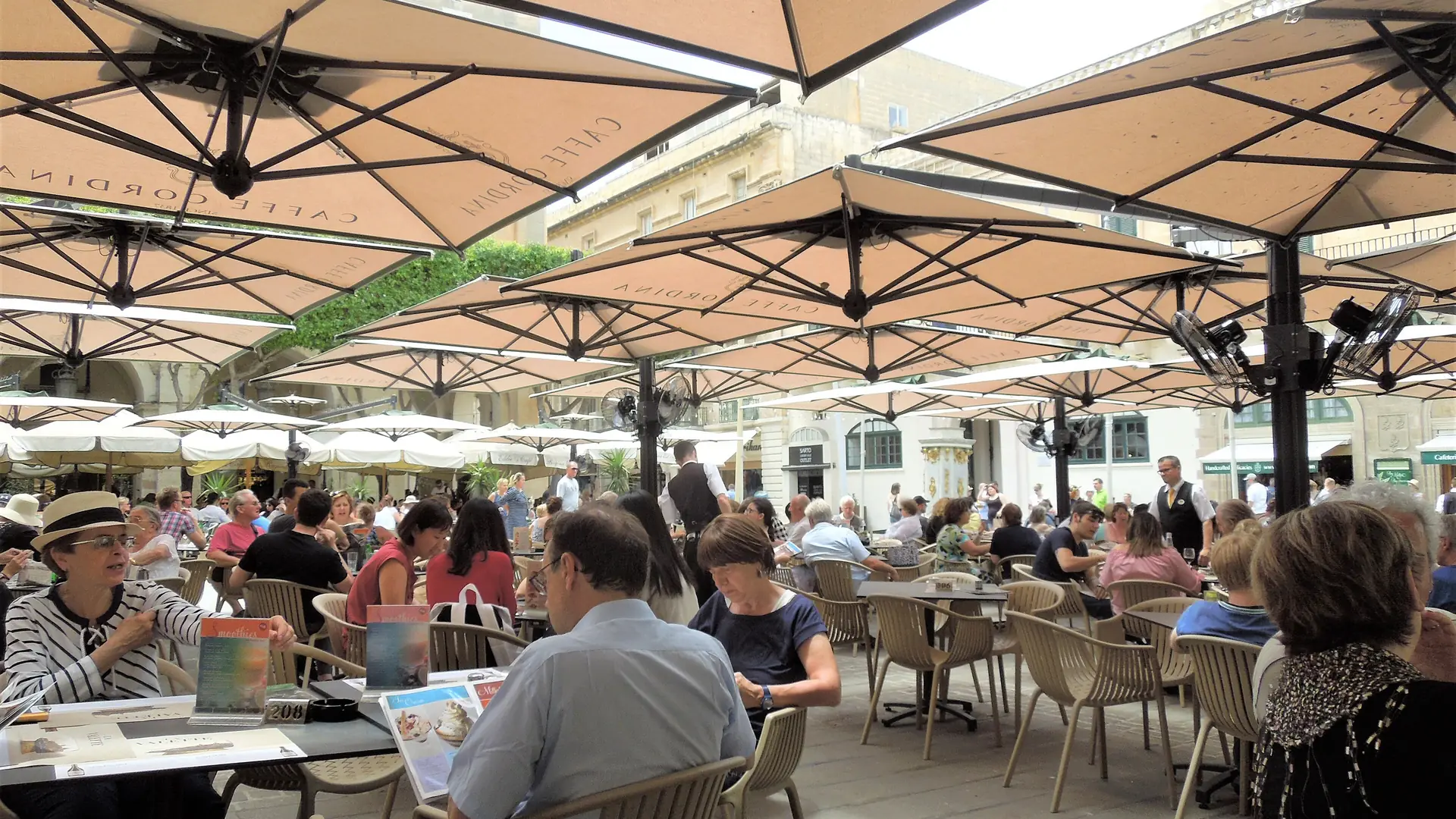
Where it catches people out is the summer. From June to September the island fills and hotel rates in Sliema and St Julian's climb to Mediterranean-peak levels that feel out of step with the €10 lunch you just had. Seafront restaurants, white taxis and organised excursions are the other three places the bill creeps.
So the cost of Malta comes down to two decisions – when you go, and where you sleep. Get both right and it is an affordable Mediterranean break with very little sacrifice.
Is Malta cheaper than Spain, Italy or Portugal?
Malta lands solidly mid-table for European travel: cheaper than Italy, France and Spain's coastal resorts, about level with Portugal and Croatia, and noticeably pricier than Eastern Europe.
| Compared with | Malta is | Where you notice it |
|---|---|---|
| UK, Ireland, Scandinavia | Much cheaper | Drinks, buses, casual meals, taxis |
| Italy, France, coastal Spain | Cheaper | Restaurant bills, coffee, beer, entry tickets |
| Portugal, Croatia | About the same | Little to choose between them day to day |
| Poland, Hungary, Bulgaria | More expensive | Almost everything, eating out most of all |
The one category where Malta does not undercut its neighbours is peak-season accommodation. In July and August, room rates in the main resort areas match anywhere in the Mediterranean – that is the great equaliser, and the reason two people can report wildly different costs for the same island.
What does a day in Malta actually cost?
Strip out flights and your room, and a day here falls into three fairly clean tiers. These are per person, sharing a room – solo travellers pay materially more, because accommodation does not split.
| Your pace | Per person, per day | What that buys |
|---|---|---|
| Shoestring | ~€50–80 | Buses, pastizzi and ftira, some self-catering, free sights and beaches, a couple of local beers |
| Mid-range | ~€100–150 | Sit-down lunch and dinner, the odd taxi, a paid boat trip or museum most days |
| Comfortable | ~€250 and up | Restaurant dinners, private transfers, premium tours, cocktails and spa time |
Malta can absorb a luxury budget, but it does not demand one – and the shoestring version is not a grim experience, because so much of what people come for costs nothing.
How much are hotels in Malta?
Your room is the biggest line in the budget and the one that swings hardest. A clean double runs from around €60–90 a night off-season and two to three times that in August, for the same room in the same hotel.
Area matters nearly as much as the calendar. Sliema and St Julian's are the priciest bases; Bugibba, Qawra and parts of Mellieħa run cheaper, and self-catering apartments cut it further on stays of a week or more.
It is worth weighing up the areas before you fix on one, because the same budget buys a very different room a few kilometres north. Our guide to where to stay in Malta breaks them down by price and character.
What do food and drink cost in Malta?
Food is where Malta stays firmly affordable, provided you step off the seafront. A pastizz – the flaky ricotta or pea pastry sold from hole-in-the-wall kavas – costs €0.50–1, and two of them are a real breakfast.
| What you are buying | Typical 2026 price |
|---|---|
| Pastizz from a kavas | €0.50–1 |
| Coffee | ~€2 |
| Local Cisk beer | €2–3 |
| Casual local main – ftira, pasta, rabbit | €8–15 |
| Dinner at a local trattoria off the strip | €18–35 per person |
| Dinner on the Sliema or Valletta seafront | €25–45 per person |
The €10 difference between those last two rows is one street. Tourist-strip restaurants in Sliema, St Julian's and Bugibba charge for the view, so walking two blocks inland buys the same food at local prices. Many places also run a fixed-price lunch menu that undercuts their own evening à la carte.
Is it expensive to get around Malta?
Transport is one of Malta's genuine bargains, with one exception.
| How you travel | What it costs |
|---|---|
| Tallinja bus, single ticket | €2 in winter, €2.50 in summer – valid 2 hours |
| Explore Card, 7 days unlimited | €25 – express routes charged separately |
| Tallinja Direct express bus from the airport | €3 per journey |
| Fixed-fare airport taxi | €17 to Valletta, €20 to Sliema or St Julian's |
| Bolt or eCabs across town | Upfront fare, consistently below a white taxi |
| Car hire | From about €25 a day |
The pricey exception is the white taxi. Skip the rank and use Bolt or eCabs, where the fare is fixed before you get in. From the airport you have the €3 express bus, the fixed-fare taxi, or a pre-booked private transfer meeting you at arrivals – our Malta airport transfers guide compares all four by group size, and getting around Malta covers the bus network.
Car hire is cheap here and worth comparing rates if you are chasing remote beaches or the south coast. For a first, city-based trip it is a cost you can skip entirely – buses and ferries reach most of what you came for, and parking in Sliema and Valletta is its own tax on the day.
What do Malta's sights and activities cost?
Much of what makes Malta worth the flight is free. Walking Valletta and walled Mdina, the Three Cities, and swimming off the rocks or the sandy bays all cost nothing – our things to do in Malta guide leans heavily on sights that do not charge, and the best beaches cost only the bus fare to reach.
What you actually pay for is a short list:
- Blue Lagoon boat trip, Comino: around €30 for a group day trip
- Ħal Saflieni Hypogeum: roughly €35, capped daily and sold out weeks ahead
- St John's Co-Cathedral, Valletta: €15 for adults, including the audio guide
- Ħaġar Qim and Mnajdra temples: about €10 on a combined ticket
- Popeye Village, Mellieħa: from about €15
- Most other museums and historic sites: €6–10
Only the Hypogeum needs booking weeks ahead – almost everything else on that list you can decide over breakfast. Even a culture-heavy week rarely runs up a large tab.
How to do Malta cheaply
The levers are simple and they stack: travel in April, May or October rather than August; base yourself outside the Sliema–St Julian's strip; ride the buses; eat one street back from the water; self-cater some breakfasts. Then spend properly on the one or two paid things you actually came for.
Do all of that and Malta genuinely lands in bargain territory – closer to €50–80 a day than €150. Skip them, lock into August and eat every dinner on the seafront, and the same island bills like the French Riviera. The choice sets the price far more than the destination does. If you are still shaping the trip, our Malta for first-timers guide covers the rest of the planning.
Featured image: Cosal / Wikimedia Commons / CC BY-SA 4.0