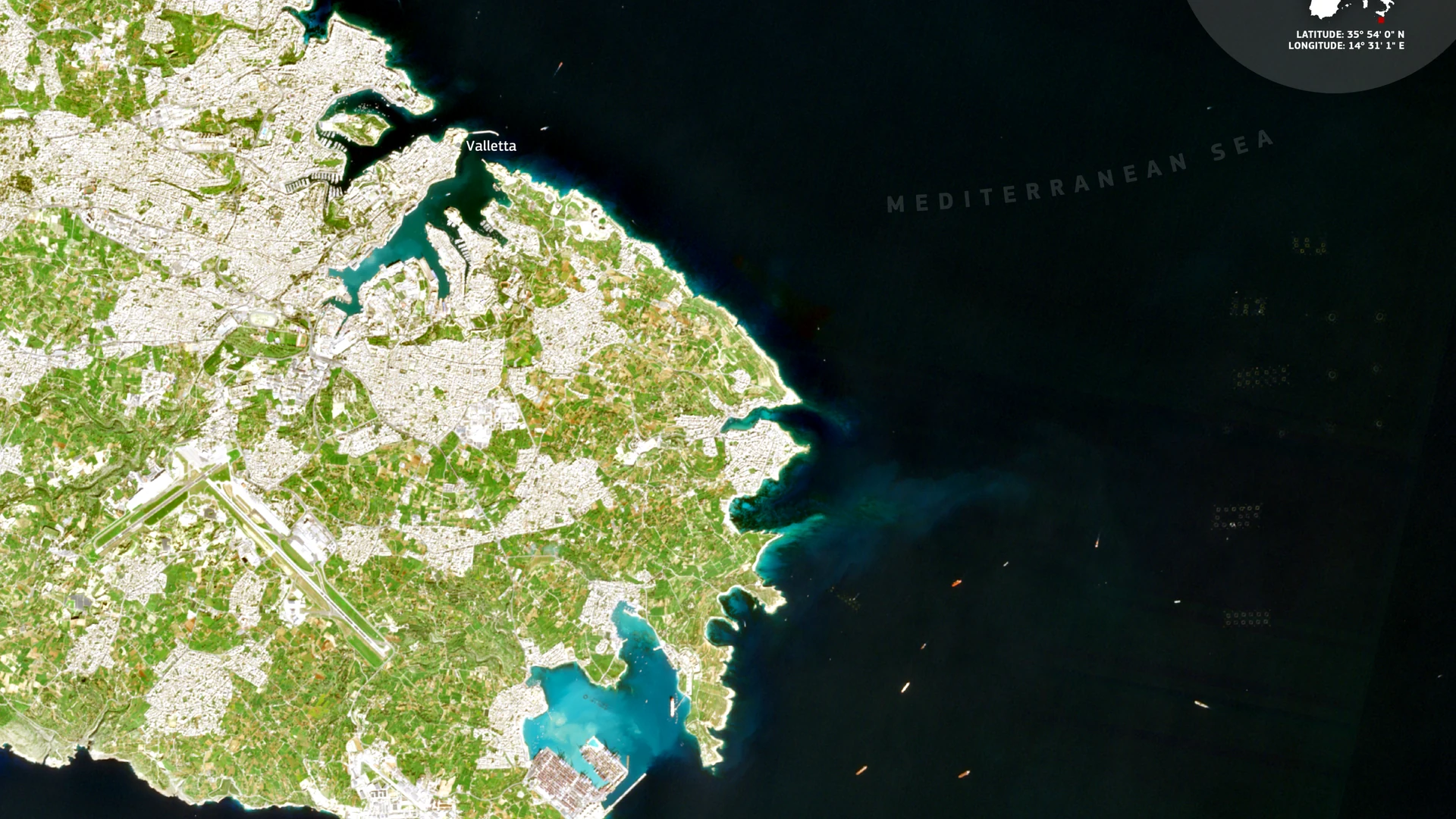
Malta suits a short break, Sicily rewards a week. Malta packs a capital, prehistoric temples, a fishing village and the clearest water in the Mediterranean into three to five days without a hire car; Sicily asks for a car, a region and enough time to eat your way through it properly.
One number decides most of this: Sicily is about 80 times larger. Malta's whole archipelago is 316 km² against Sicily's 25,700 km², the biggest island in the Mediterranean. Everything else here – how you travel, how long you need, how much you see in a day – follows from that.
Malta vs Sicily at a glance
| Malta | Sicily | |
|---|---|---|
| Size | ~316 km² (whole archipelago) | ~25,700 km² |
| Population | ~549,000 | ~4.8 million |
| Flight from the UK | ~3 hrs direct | ~2.5–3 hrs direct to Catania or Palermo |
| UNESCO sites | 3, within half an hour of each other | 7, spread across the island |
| Peak summer | ~31–33 °C | ~33–35 °C on the coast, high 30s inland |
| Getting around | No car needed | A car is close to essential |
| Food | Good, but not the reason to go | One of Europe's great food cultures |
| Typical daily cost | ~€58–170 per person | ~€55–220 per person |
| Ideal trip length | 3–5 days | A week or more |
Size and how you travel
The size gap is the most important practical fact in this comparison. Malta is small enough to drive across in 45 minutes, so you can take in a walled capital, an ancient temple, a fishing village and a swim in the same day without planning anything.
Sicily takes days to cross and holds genuinely distinct regions – Arab-Norman Palermo, the Baroque towns of the Val di Noto, the Greek temples at Agrigento, Taormina's beaches, Etna over the east coast. You pick a region and work outward from it rather than trying to see the island.
Edge: Malta for a short trip, Sicily for a long one – this is the whole comparison in miniature.
History and UNESCO sites
Both punch above their weight, but in opposite ways. Malta has three UNESCO World Heritage Sites – Valletta, the Megalithic Temples and the Ħal Saflieni Hypogeum – and you can reach all three within half an hour of each other.
Sicily has seven: the Agrigento archaeological area, the Villa Romana del Casale at Piazza Armerina, Syracuse with the Pantalica necropolis, the Baroque towns of the Val di Noto, Arab-Norman Palermo with Monreale and Cefalù, Mount Etna, and the Aeolian Islands. That is more than twice Malta's count, spread across an island that needs a car and a week.
So the real contrast is density against depth. Malta gives you more world heritage per day than almost anywhere in Europe; Sicily gives you far more of it in total, one civilisation at a time.
Edge: Malta if your days are limited, Sicily if you have the week to do it justice.
Food
This is Sicily's clearest win. Arancini, pasta alla Norma, swordfish, granita with brioche, cannoli and the street-food markets of Palermo and Catania add up to a cuisine shaped by Arab, Greek, Norman and Spanish rule, and it is a legitimate reason to book the trip.
Malta's food has improved and Valletta and Sliema have genuinely good restaurants now. Traditional Maltese cooking – pastizzi, rabbit stew, ftira – is worth seeking out, but it is not what you will tell people about afterwards.
Edge: Sicily, by a clear margin. If food is the point of the holiday, this decides it.
Beaches
Sicily has the longer and more varied coastline: the white sand of San Vito Lo Capo in the west, the chalk terraces of the Scala dei Turchi, black volcanic beaches near Catania and the Aeolian Islands offshore.
Malta's coast is mostly rock, with a handful of sandy bays and a lot of ladder-and-lido swimming. What it has instead is water – Comino's Blue Lagoon is a shade of turquoise that nothing in Sicily matches for sheer intensity.
Edge: Sicily for sand and variety, Malta for the colour of the water and how easily you reach it.
Cost
Both use the euro and neither is meaningfully cheaper overall. Directionally, Malta runs about €58–170 per person per day and Sicily about €55–220 – Sicily's floor is a little lower thanks to rural agriturismi, its ceiling higher, while Malta's range is more compressed.
Malta's size keeps the incidentals down: nowhere is more than 45 minutes from the airport, so transfers and taxis stay cheap. Sicily's savings come from staying inland and away from the coastal resorts, which is only an option if you have hired a car anyway.
Edge: line ball. Pick on the trip you want, not the budget.
Language and practicality
English is an official language in Malta and is spoken everywhere – buses, museums, restaurants, hotels – so nothing about the logistics requires effort.
In Sicily, English is common in the tourist centres and thin outside them. A little Italian goes a long way in the interior, and it is worth having a translation app for anywhere off the main routes.
Edge: Malta, clearly – it is the easier island to arrive in cold.
The verdict
Choose Malta if you have three to five days, want history you can walk between, would rather not hire a car, and like the idea of a boat trip to the Blue Lagoon as the centrepiece. It is the stronger pick for a first Mediterranean trip and for a city-and-coast combination.
Choose Sicily if you have a week or more, food matters as much as sightseeing, and you want landscapes that change as you drive – mountains, volcano, Baroque towns and beaches in one trip. It rewards the repeat Mediterranean traveller who wants to go deep rather than wide.
If Malta is the one you are leaning towards, things to do in Malta is the place to start, where to stay in Malta compares the areas, and our 5-day Malta itinerary shows how the days fall. You can also book a Malta airport transfer for when you land.
Can you visit both?
Yes, and more easily than most people think. A Virtu Ferries high-speed catamaran runs Valletta to Pozzallo in about 1 hour 45 minutes, two to three times a day, all year round – it is often described as seasonal, and it is not. It is the only ferry link between the two islands, and the same operator sells Sicily day-excursions from Malta.
That makes a combined trip straightforward: a few days in Malta, then a crossing to the Sicilian south-east for the Val di Noto and Syracuse. The two complement each other rather than repeating – compact against sprawling, limestone against volcano.
Featured image: European Union, Copernicus Sentinel-2 imagery / Wikimedia Commons / Attribution