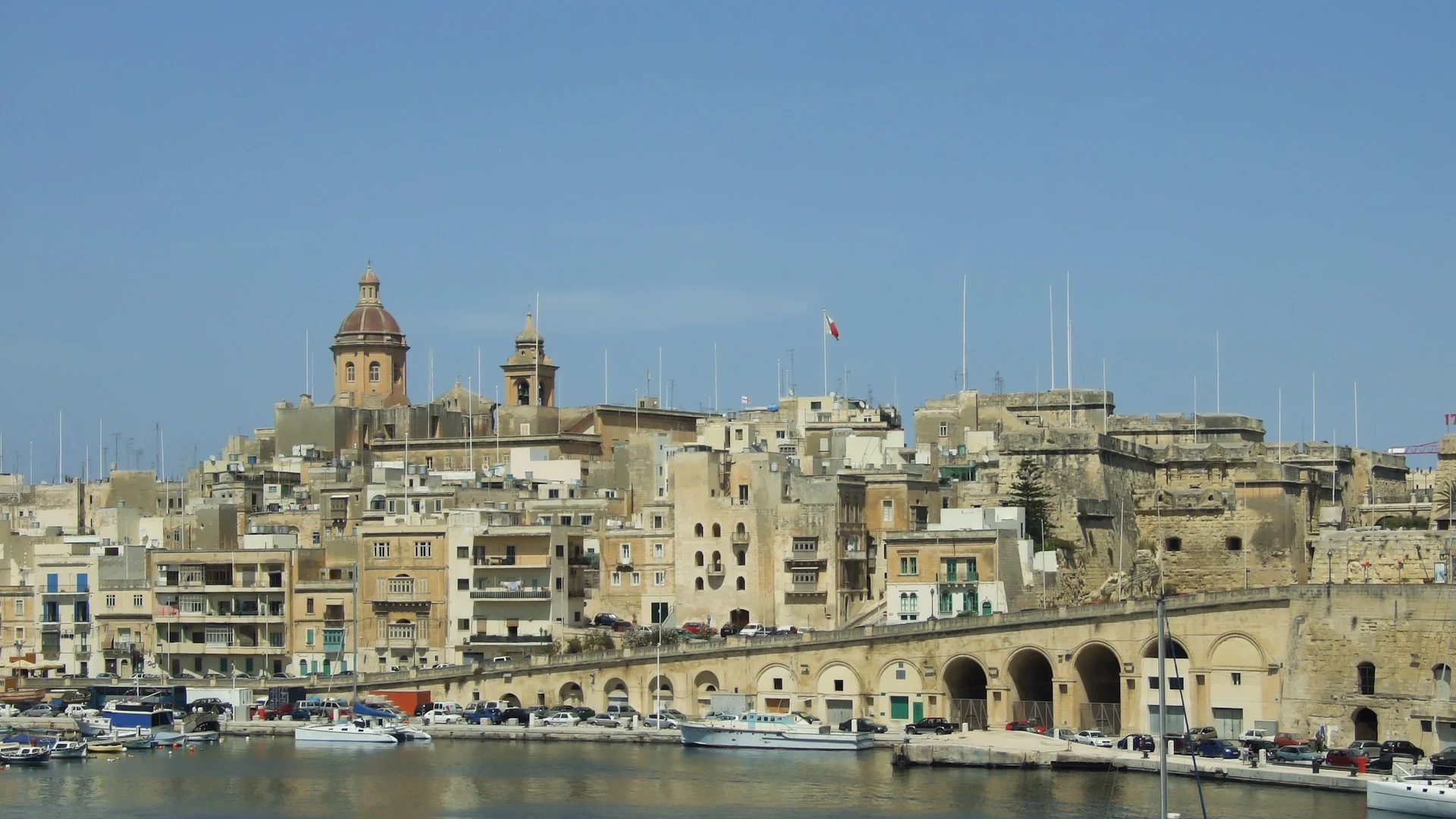
The Three Cities sit five minutes across the Grand Harbour from Valletta, and they are the half of the harbour that most visitors photograph but never set foot in. Birgu (Vittoriosa), Senglea (Isla) and Cospicua (Bormla) are older than the capital – the Knights of St John settled here first, in 1530 – and they trade Valletta's polish for working marinas and lived-in streets.
Half a day covers it, and the paid sights are cheap: Fort St Angelo is €10 and the Inquisitor's Palace around €6. The crossing itself is part of the appeal, whether you take the €3 Grand Harbour ferry or a traditional dgħajsa water taxi. Here is what to see, what it costs, and the combo ticket worth knowing about.
Valletta: 3 Cities Guided Tour & Grand Harbour Boat Tour
A guided walk through Birgu's medieval lanes, a traditional harbour boat tour across the Grand Harbour's creeks, and the view from Senglea's gardens – the crossing, the walk and the history bundled into one half-day booking.
- Guided walk through Birgu's (Vittoriosa's) narrow medieval lanes
- Traditional harbour boat tour of the Grand Harbour's creeks
- Live guide in English, French, German, Italian and Spanish
What does a visit cost?
| Item | Price | Notes |
|---|---|---|
| Fort St Angelo | €10 adult | €6 concession, €4 child |
| Inquisitor's Palace | around €6 adult | Heritage Malta site |
| Birgu Ticket (combo) | €13 adult | Fort St Angelo + Inquisitor's Palace + Maritime Museum |
| Grand Harbour ferry | €3.00 single / €5.00 return | €3.50 / €5.20 after 19:30 |
| Dgħajsa water taxi | €2–3 per person each way | Sources vary – agree it before boarding |
| Streets, Gardjola Gardens, waterfront | Free | The best of it, honestly |
If you plan to see both Fort St Angelo and the Inquisitor's Palace, buy the Birgu Ticket. At €13 it undercuts the €16 you would pay for those two separately, and it throws in the Malta Maritime Museum – which matters because that pairing is exactly the route most visitors walk anyway.
The Three Cities, explained
The name covers three fortified towns on two peninsulas jutting into the Grand Harbour, known collectively as Cottonera after the ring of walls enclosing them. Birgu and Senglea face each other across Dockyard Creek; Cospicua sits at the back, joining the two.
This is where the Knights of St John first based themselves in 1530, decades before Valletta existed. Birgu's Fort St Angelo anchored the defence during the Great Siege of 1565, which gives these streets more raw history per square metre than anywhere else in Malta.
What you get today is a quieter, more residential version of the capital: the same architecture and harbour drama, with locals going about their day instead of tour groups.
Birgu (Vittoriosa): the one to walk
If you explore only one of the three on foot, make it Birgu – a dense knot of medieval lanes, the old Knights' quarter known as the Collachio, and a waterfront of yachts and harbourside restaurants.
Fort St Angelo at the tip of the peninsula is the headline sight, the fortress that held during the 1565 siege and still commands the best harbour views in the Three Cities.
- Entry: €10 adult, €6 concession, €4 child
- Summer hours: 1 March to 31 October 2026, daily 09:00–19:00
- Last admission: 30 minutes before closing
- Winter hours: shorter, and not published far ahead – check Heritage Malta before a November-to-February visit rather than assuming the summer window
- Time needed: about an hour
A short walk inland, the Inquisitor's Palace costs around €6 and is one of very few surviving inquisitor's palaces anywhere in the world, now a museum of the Roman Inquisition in Malta. It is an unusual, genuinely atmospheric stop.
Save time for the Birgu waterfront in the late afternoon, when the light hits the fortifications across Dockyard Creek and the restaurants fill up.
Senglea (Isla): the watchtower and the view
Senglea is the smallest and most compact of the three, and its highlight takes twenty minutes. Walk to the tip of the peninsula and the Gardjola Gardens, where a stone watchtower – the Vedette – is carved with an eye, an ear and a crane: the symbols of vigilance.
The view sweeps across the Grand Harbour straight to Valletta and Fort St Angelo opposite, and it is free. It is the postcard shot of the Three Cities – and the mirror image of the one you get looking back from the Upper Barrakka Gardens.
Beyond the gardens Senglea is mostly residential – a few quiet streets and a basilica – so the viewpoint is the reason to come.
Cospicua (Bormla): the everyday city
Cospicua is the largest and least visited of the three, at the head of the creek between Birgu and Senglea. It is more workaday than its neighbours, having been the heart of Malta's historic dockyards, and most people pass through rather than linger.
What it offers is scale: the Cottonera Lines and the Santa Margherita Lines, the vast defensive walls ringing the towns. Walking between Birgu and Senglea takes you through Cospicua anyway, so treat it as the connective tissue of the visit.
Getting there: the ferry and the dgħajsa
The Grand Harbour ferry costs €3.00 single and €5.00 return by day, rising to €3.50 and €5.20 after 19:30, and takes about five minutes from Valletta. Buy the return unless you are certain you are coming back another way.
The traditional alternative is a dgħajsa, the brightly painted Maltese water taxi, which crosses the harbour with the fortifications rising on both sides. Expect roughly €2–3 per person each way – published figures vary, so agree the fare before you step aboard rather than after.
Buses also reach the Three Cities from Valletta and the airport if you would rather stay on land, though you miss the best part of the approach.
For the guided version, the 3 Cities tour with a Grand Harbour boat ride bundles the crossing, the Birgu walk and the Senglea viewpoint with the history filled in. If you would rather see the harbour only from the water, the Valletta and Three Cities cruise from Sliema loops the bastions in 90 minutes without landing.
How to spend half a day
Cross from Valletta and start on the Birgu waterfront, then climb to Fort St Angelo for the siege history and the views. Drop back down through the Collachio lanes to the Inquisitor's Palace – and if you are doing both, buy the Birgu Ticket at the first one.
From there walk through Cospicua to Senglea and out to the Gardjola Gardens for the view back to Valletta. Finish with a late lunch on the Birgu waterfront before the ferry back.
That is a relaxed half-day, and it slots neatly into a 3-day Malta itinerary as the afternoon half of a Valletta day, since the two sit minutes apart across the water.
Featured image: MrPanyGoff / Wikimedia Commons / CC BY-SA 3.0