Living in Malta costs a single person about €1,650–1,850 a month in 2026, rent included, and a family of four about €4,300–4,700 – figures built from Numbeo's October 2026 data. Rent decides most of it: a one-bedroom flat averages ~€870 outside the main centres and ~€1,060 in them. Day to day, the UK is 11–17% more expensive than Malta for rent, restaurants and groceries, but Maltese net salaries are roughly half.
How much does it cost to live in Malta per month?
Numbeo's crowd-sourced index, last updated on 16 October 2026, puts a single person's monthly costs at ~€785 excluding rent and a family of four's at ~€2,913 excluding rent. Add a typical rent and you get realistic budgets:
| Household | Rent | Living costs (excl. rent) | Monthly total |
|---|---|---|---|
| Single person, one-bedroom outside the centre | ~€870 | ~€785 | ~€1,650 |
| Single person, one-bedroom in a central area | ~€1,060 | ~€785 | ~€1,850 |
| Couple sharing a central one-bedroom | ~€1,060 | ~€1,250–1,500 | ~€2,300–2,600 |
| Family of four, three-bedroom outside the centre | ~€1,415 | ~€2,915 | ~€4,330 |
| Family of four, three-bedroom in a central area | ~€1,750 | ~€2,915 | ~€4,670 |
The couple figure is our estimate: two people's living costs on one rent, with bills and the flat shared. International school fees come on top for families who need them.
How much is rent in Malta?
Rent is the line that swings a Maltese budget by hundreds of euros. Numbeo's October 2026 averages:
| Flat | Central areas | Outside the centres |
|---|---|---|
| One bedroom | ~€1,060 (typically €800–1,560) | ~€870 (typically €700–1,100) |
| Three bedrooms | ~€1,750 (typically €1,200–3,000) | ~€1,415 (typically €1,000–2,130) |
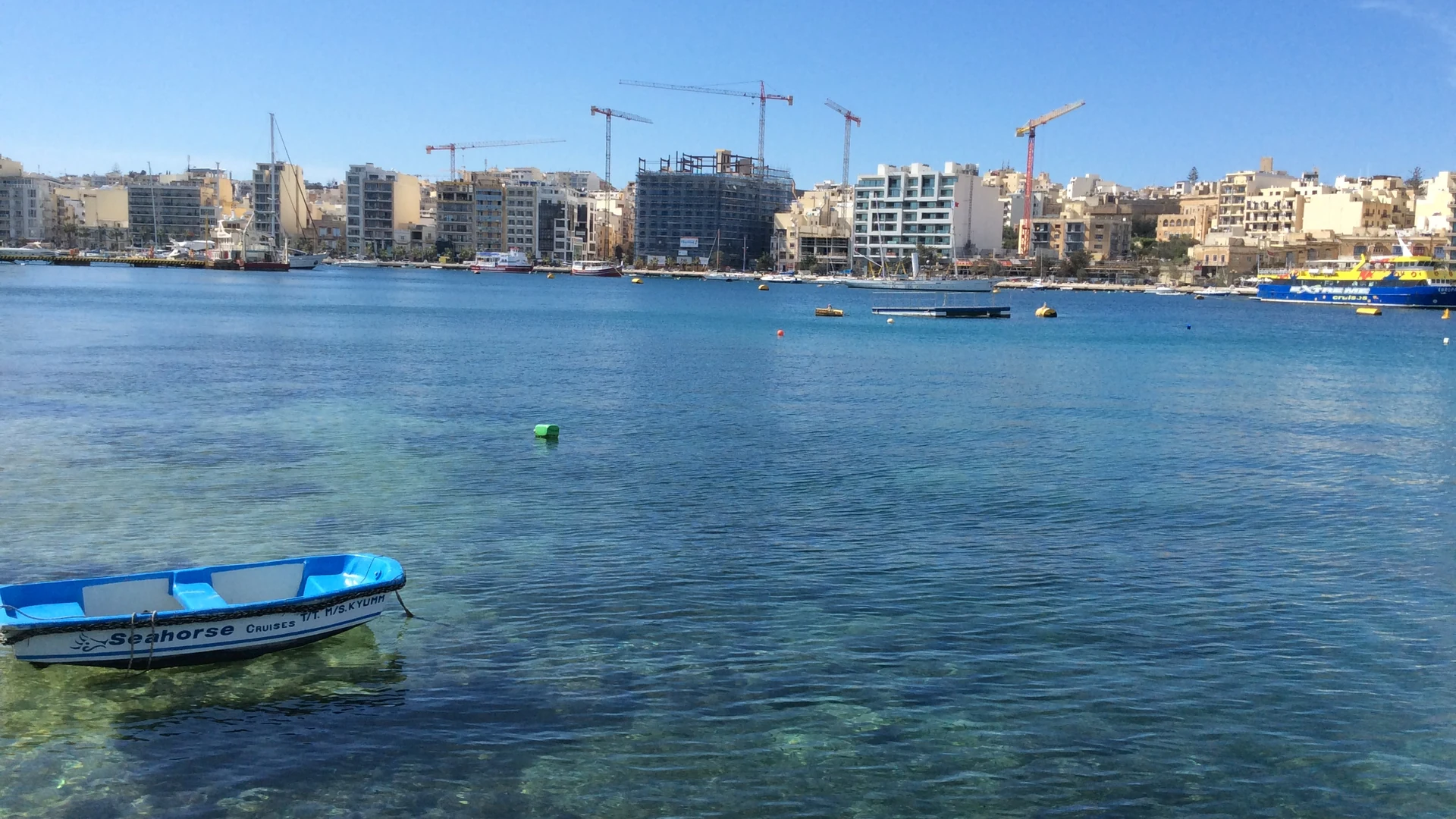
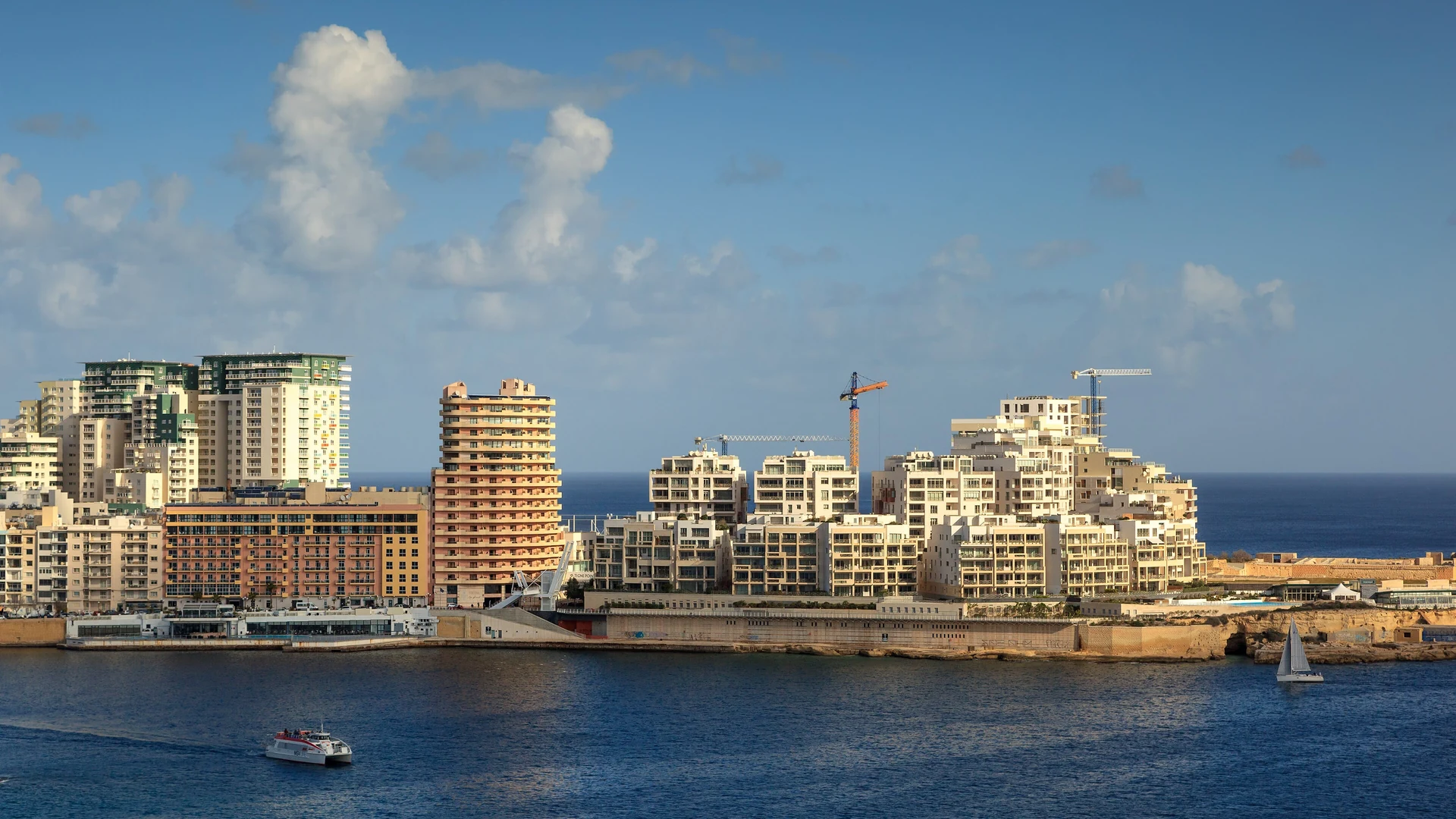
Location matters more than size. Rental guides tracking 2026 listings put a one-bedroom in Sliema or St Julian's at roughly €1,100–1,500, in Birkirkara or Qormi at about €850–1,100, and on Gozo at roughly €500–750. The Sliema and St Julian's area guide shows why the harbour towns carry the premium: seafront, cafés and the ferry to Valletta.
Malta's rental law protects tenants more than many newcomers expect. Under the Private Residential Leases Act (Cap. 604), a long let runs for at least one year, rent can rise only once a year and never by more than 5%, and the landlord must register the contract with the Housing Authority within 30 days.
What do bills, food and transport cost in Malta?
Everyday prices are close to southern Europe. These are Numbeo's October 2026 averages:
| Item | Typical price |
|---|---|
| Basic utilities (electricity, water, waste) for an 85 m² flat | ~€93 a month (€60–150) |
| Mobile plan with 10 GB+ data | ~€24 a month |
| Home broadband, 60 Mbps+ | ~€31 a month |
| Gym membership | ~€62 a month |
| Milk, 1 litre / fresh loaf | ~€1.19 / ~€1.09 |
| 12 eggs | ~€3.55 |
| Chicken fillets | ~€8.80 a kilo |
| Petrol | ~€1.34 a litre |
Summer is when bills jump: air conditioning from June to September can push electricity towards the top of the €60–150 range in a poorly insulated flat.
Buses are free for residents. Since 1 October 2022, anyone living in Malta or Gozo with a personalised Tallinja card rides scheduled buses at no cost, while visitors pay €2 a ticket in winter and €2.50 in summer. Routes and the card are covered in our guide to getting around Malta.
How much is a pint and a meal in Malta?
A pint of local draught beer costs ~€4 in a bar (Numbeo's range runs from €2 to €5), and a half-litre bottle of Cisk or another local beer is ~€1.56 in a supermarket. A cappuccino is ~€2.50.
A meal at an inexpensive restaurant is ~€15, and dinner for two at a mid-range restaurant – three courses without wine – is ~€75. Visitors on a short trip can find the full breakdown of holiday costs in is Malta expensive.
Is it cheaper to live in Malta than the UK?
On prices, yes. Numbeo's October 2026 comparison finds rent 11% higher in the UK, restaurant prices 17% higher and groceries 15% higher than in Malta. A one-bedroom in a city centre averages ~€1,060 in Malta against ~€1,190 in the UK.
On salaries, no. The average monthly net salary is ~€1,590 in Malta against ~€2,975 in the UK, and Numbeo rates local purchasing power 58% higher in the UK. Malta is cheaper for people bringing a UK-level income – remote workers, pensioners, senior hires – and harder for those earning a Maltese wage.
Is €1,000 a month enough to live in Malta?
Not if you rent alone. €1,000 barely covers the ~€870 average for a one-bedroom outside the centres before bills, food and transport. It works only in a shared flat or with a partner's income.
That matters because many workers earn close to it. The national minimum wage is €229.44 a week in 2026 for workers aged 18 and over – about €994 a month gross, ~€895 after social security (no income tax is due below €12,000 a year). The average monthly basic salary was ~€2,280 gross in the second quarter of 2026, according to the National Statistics Office.
What does it cost to live in Malta as a student or a family?
International students should budget at least the single-person living costs of ~€785 a month plus their share of rent. Splitting a three-bedroom flat outside the centre three ways comes to ~€470 each, so ~€1,250 a month is a realistic floor before tuition.
Families face two extra lines. Private pre-school or kindergarten averages ~€383 a month per child, and international primary schools charge ~€9,930 a year on average (typically €6,000–15,000). State schools are free, and teaching is in English and Maltese.
The cheapest way to cut the family budget is location: moving from a central three-bedroom (€1,750) to one outside the harbour area (€1,415) saves ~€4,000 a year in rent, and Gozo saves more.
Your salary after tax decides which of these budgets is realistic – work it out with the 2026 rates in Malta tax for expats. If you are still planning the move itself, start with our guide to moving to Malta, and non-EU workers should read the Malta work permit guide before accepting an offer.
01How much does it cost to live in Malta per month?
A single person needs about €1,650–1,850 a month in 2026 including rent: roughly €785 in living costs plus €870–1,060 for a one-bedroom flat, based on Numbeo's October 2026 data. A family of four needs about €4,300–4,700 a month including a three-bedroom flat, before any international school fees.
02Is it cheaper to live in Malta than the UK?
Prices are lower in Malta: Numbeo's October 2026 comparison finds rent 11% higher in the UK, restaurants 17% higher and groceries 15% higher. Salaries are lower too – the average net monthly salary is about €1,590 in Malta against about €2,975 in the UK – so Malta is cheaper mainly for people bringing a UK-level income.
03Is 1000 euros enough to live in Malta?
Not for someone renting alone. A one-bedroom flat outside Malta's main centres averages about €870 a month in October 2026, before bills, food and transport. €1,000 a month can work in a shared flat or with a partner's income. The 2026 minimum wage of €229.44 a week works out to about €895 a month after social security.
04How much is rent in Malta in 2026?
Numbeo's October 2026 averages are about €1,060 a month for a one-bedroom flat in central areas and €870 outside them, and about €1,750 and €1,415 for a three-bedroom flat. Sliema and St Julian's are the most expensive areas, at roughly €1,100–1,500 for a one-bedroom, while Gozo is the cheapest.
05How much is a pint in Malta?
A pint of local draught beer costs about €4 in a Maltese bar in 2026, with prices ranging from about €2 to €5. A half-litre bottle of local beer such as Cisk costs about €1.56 in a supermarket, according to Numbeo's October 2026 prices.
06How much does a meal cost in Malta?
A meal at an inexpensive restaurant in Malta costs about €15 in 2026, and a three-course dinner for two at a mid-range restaurant, without drinks, costs about €75, according to Numbeo's October 2026 data. A cappuccino costs about €2.50.
Featured image: Anton Zelenov / Wikimedia Commons / CC BY-SA 4.0