Moving to Malta depends on one thing: your passport. EU, EEA and Swiss citizens can move freely and register with Identità if they stay longer than three months – for free. Everyone else, including Britons since Brexit, needs a permit before living or working: usually a Single Permit through an employer (€600), the Nomad Residence Permit for remote workers earning €42,000+, or an investor route such as the MPRP (€99,000 in fees plus property).
Can you move to Malta? It depends on your passport
Malta is an EU and Schengen country where English is an official language alongside Maltese, which makes it one of the easiest places in Europe to settle in practically. Legally, though, the rules split cleanly in two:
| Your passport | Can you live in Malta? | What you need |
|---|---|---|
| EU, EEA, Swiss | Yes, freely | Register with Identità after three months; the eResidence document is free |
| UK (arrived after 2020) | Only with a permit | Treated as a non-EU national: Single Permit, Nomad Residence Permit, a tax programme or the MPRP |
| US, Canada, Australia | Visits only without a permit | 90 days in any 180 visa-free; living there needs one of the permits below |
| India, Philippines, Nepal, Bangladesh, Pakistan and most other countries | Only with a permit | A Single Permit through a Maltese employer, then a national entry visa |
Foreigners already make up a large part of the island: almost a third of Malta's ~588,000 residents were non-Maltese citizens at the end of 2025, according to National Statistics Office figures. You will not be the only newcomer in the office, the flat share or the queue at Identità.
Moving to Malta as an EU citizen
EU, EEA and Swiss citizens do not need a permit to live or work in Malta. If you stay longer than three months, you register your residence with Identità's Expatriates Unit and receive an eResidence document that reflects why you are there – work, self-employment, study or self-sufficiency.
Applying is free of charge; replacing a damaged card costs €16.50 and a lost one €22. After five years of legal residence, EU citizens acquire permanent residence automatically under EU free-movement law.
Irish citizens moving from Ireland follow exactly these EU rules, which makes Malta one of the simplest English-speaking moves available to them. Your EU driving licence stays valid as it is.
Moving to Malta from the UK after Brexit
UK citizens can still move to Malta, but no longer freely. Britons who were legally living in Malta before the end of 2020 keep their rights under the Withdrawal Agreement. Anyone arriving since is a third-country national, with the same options as an American or an Indian applicant.
In practice, Britons use four routes:
- A job: the employer applies for a Single Permit, or the fast-track Key Employee Initiative for jobs paying at least €45,000 a year.
- Remote work: the Nomad Residence Permit for people earning at least €42,000 a year from a foreign employer or clients.
- Retirement: the Malta Retirement Programme, which taxes pension income brought into Malta at 15%, with a €7,500 minimum.
- Investment: the MPRP, which gives permanent residence from approval.
Malta feels familiar to Britons in small ways: cars drive on the left, sockets are the UK three-pin type and English is used in every office. A UK driving licence can be used for up to 12 months from your last entry, and once you have lived in Malta for 185 days in the previous 12 months you can exchange it without a test under the UK–Malta agreement.
Moving to Malta from the USA, Canada or Australia
Americans, Canadians and Australians can visit Malta visa-free for up to 90 days in any 180, but that time does not let you live or work there. To stay longer you need the same kind of permit as any non-EU national: a job-based Single Permit, the Nomad Residence Permit for remote work, a tax programme for people living on foreign income, or the MPRP.
Driving is the hidden snag. Transport Malta's licence-exchange list covers EU and EEA countries, Switzerland, the UK, Australia and the UAE – so an Australian licence can be swapped, while US and Canadian licence holders should expect to take the Maltese driving test after their first 12 months.
US citizens stay taxable in the United States wherever they live, so the Maltese tax rules in our Malta tax for expats guide come on top of your US filing, not instead of it.
Moving to Malta for work from India, the Philippines or Nepal
Many people who move to Malta from outside Europe come for a job – in hospitality, care, construction, transport, IT or iGaming. The route is the same for every nationality:
- A Maltese employer registered with Jobsplus offers you a job and advertises it first.
- You complete the €250 Pre-Departure Course, mandatory for first-time applicants since 2026, plus the Skills Pass for tourism and hospitality jobs.
- The employer files the Single Permit (€600), and Identità decides in about two months on average.
- With the Approval in Principle letter, you apply for an entry visa within 180 days at the Maltese embassy or consulate covering your country.
Never pay for a "visa slot" or a job offer. Recruitment agencies placing non-EU workers need an Employment Agency Licence from DIER since 1 June 2024, and Identità rejects applications from unlicensed agencies.
Which visa or permit is right for you?
Malta has more residence routes than most EU countries. These are the ones newcomers actually use:
| Route | Best for | Key condition | Fee |
|---|---|---|---|
| Single Permit | Employees from outside the EU | A job offer from a Jobsplus-registered employer | €600, then €150 a year |
| Key Employee Initiative | Senior and technical hires | Salary of at least €45,000 | €600, processed in 5 working days |
| Nomad Residence Permit | Remote workers | €42,000+ a year from a foreign employer or clients | Separate application to Residency Malta |
| Self-employment permit | Freelancers | A Jobsplus employment licence | €100 a year |
| Global Residence Programme / Malta Retirement Programme | People living on foreign income or pensions | Qualifying property; 15% tax on income brought in | Tax minimum of €15,000 / €7,500 |
| MPRP | Investors wanting permanence | Capital of €500,000+ and a home bought for €375,000 or rented for €14,000 a year | €99,000 in fees and contributions |
After five years on most of these routes, non-EU residents can apply for long-term residence for €500 – the full comparison is in our guide to Malta permanent residence.
How much money do you need to move to Malta?
Plan for two numbers: the monthly budget and the cash to get started. A single person spends about €1,650–1,850 a month including rent, and a family of four about €4,300–4,700, based on Numbeo's October 2026 data – broken down line by line in our cost of living in Malta guide.
For the start-up cash, a single person renting a central one-bedroom should budget roughly:
- First month's rent and a one-month deposit: ~€2,100
- Three months of living costs while you settle: ~€2,400
- Permit costs (non-EU): €600 Single Permit, €250 Pre-Departure Course, health insurance with at least €100,000 cover
- Flights, shipping and furniture: depends entirely on what you bring
That puts a sensible cushion at €6,000–8,000 for a single person, before any furniture. Families should multiply the rent lines, and remote workers must show the €42,000 annual income for the Nomad Residence Permit regardless of savings.
Where should expats live in Malta?
Malta is small – about 27 km end to end – but areas differ sharply in price and pace:
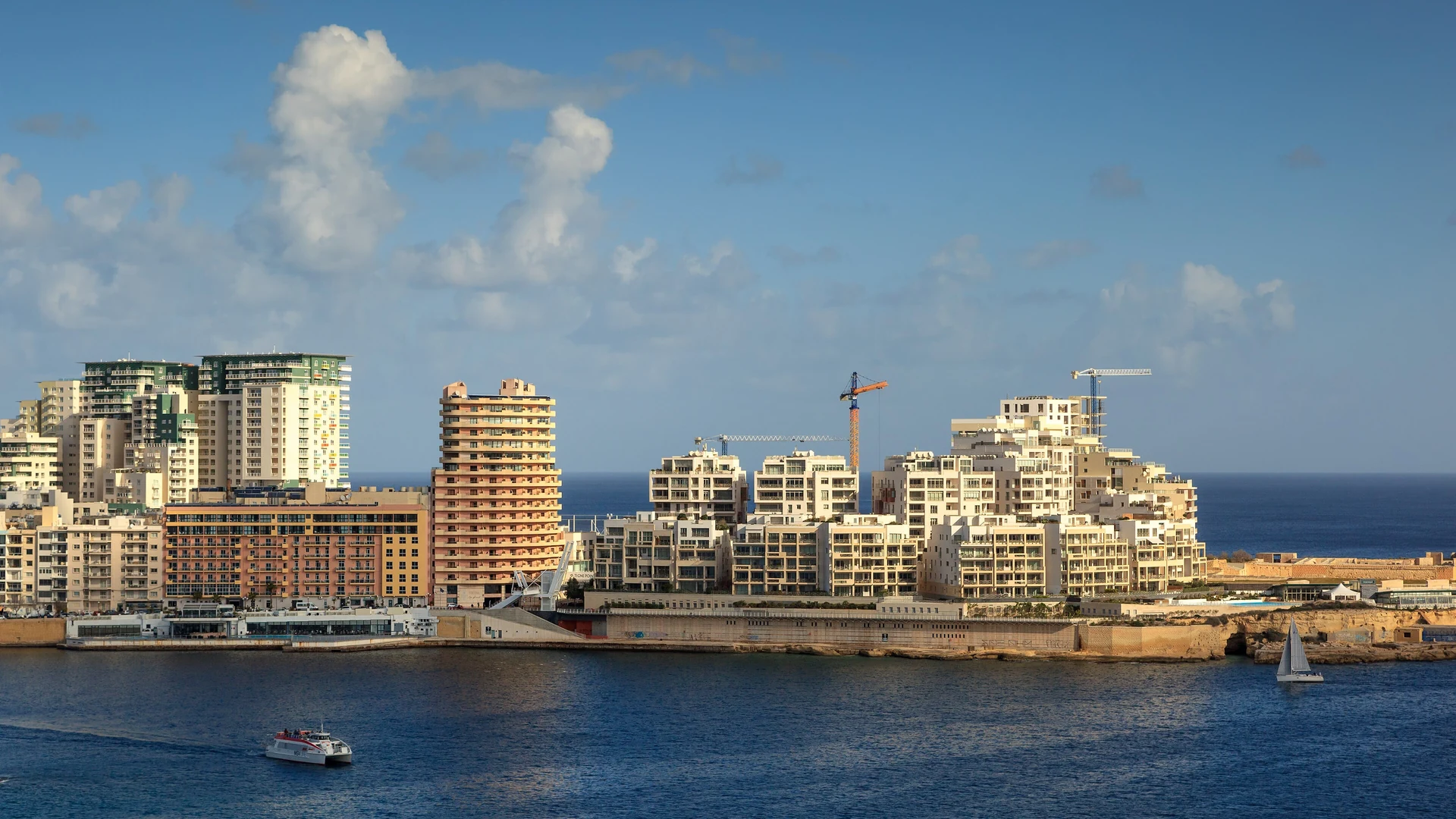
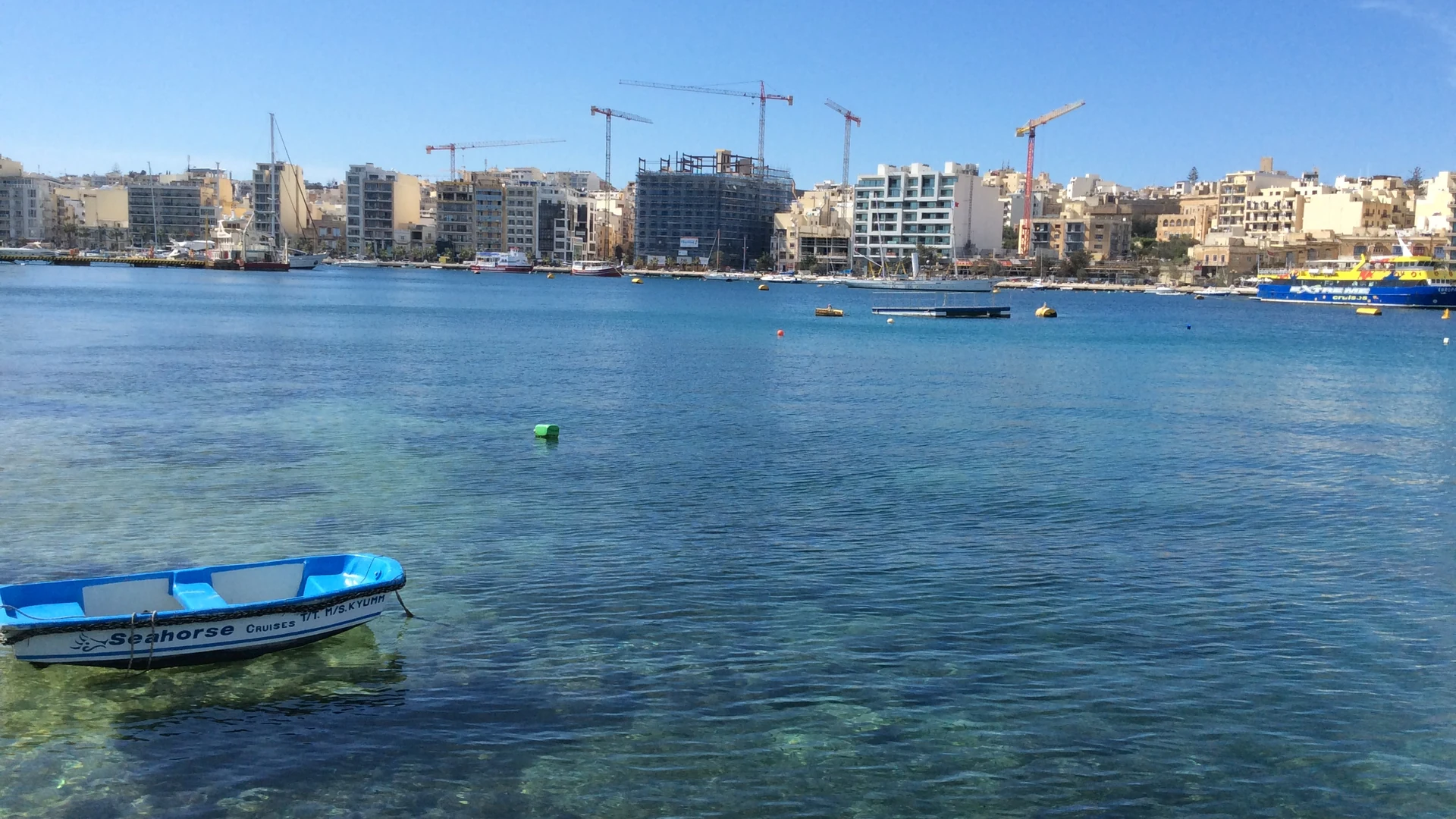
- Sliema, St Julian's and Gżira: the expat centre, with the most offices, cafés and English heard on the street. The most expensive area, at roughly €1,100–1,500 for a one-bedroom. Our Sliema and St Julian's guide shows the area at street level.
- Msida, Swieqi and Ta' Xbiex: close to the University of Malta and Mater Dei Hospital, and slightly cheaper.
- Birkirkara, Qormi and Mosta: central, Maltese and cheaper, at about €850–1,100 for a one-bedroom, with heavy traffic at rush hour.
- St Paul's Bay, Qawra and Mellieħa: beaches and a quieter north, but a longer commute to the harbour offices.
- Gozo: the cheapest rents, at roughly €500–750 for a one-bedroom, and a much slower life, with the Gozo ferry as your daily link to Malta.
Your first month in Malta: what to sort out
The order matters, because each step unlocks the next:
- Secure a registered lease. The landlord must register it with the Housing Authority within 30 days, and your permit application needs it.
- Register or complete biometrics at Identità in Msida to get your eResidence document or residence card.
- Open a bank account. The main local banks are Bank of Valletta, APS Bank, MeDirect and HSBC Malta – which is being sold to Greece's CrediaBank. Expect to show your passport, lease and employment contract, and to wait while due-diligence checks are done.
- Get a personalised Tallinja card – buses are free for residents – and a local SIM; until then an eSIM for Malta keeps you connected.
- Sort healthcare. Workers paying social security contributions are generally covered by the state health service; keep private insurance until your status is confirmed.
What are the pros and cons of living in Malta?
The pros: English works everywhere, Malta is in the EU and the euro zone, the winters are mild, distances are short, and the country is generally safe. For people earning a foreign income, the non-dom tax rules and flat-rate regimes are a real advantage.
The cons – the "bad things about living in Malta" people search for – are just as real. Malta is the most densely populated country in the EU, with about 1,860 people per km², and you feel it in traffic, construction noise and dust. Summers are hot and humid, rents are high relative to local wages, and paperwork at Identità can be slow.
Is it difficult to move to Malta? For EU citizens, hardly at all. For everyone else, it is as hard as finding the right permit – easiest with a job offer or a solid remote income, slowest without either. If you are weighing the islands against another sunny EU base, our Malta vs Cyprus comparison sets the two side by side.
The move itself is manageable; the permit is the part to get right first.
Non-EU readers should start with the work permit or permanent residence guide linked above, then build the budget from the cost of living figures.
01Can UK citizens move to Malta?
Yes, but since Brexit UK citizens who were not already living in Malta before the end of 2020 need a residence permit like any non-EU national. The usual routes are a Single Permit through a Maltese employer, the Nomad Residence Permit for remote workers earning at least €42,000 a year, the Malta Retirement Programme for pensioners, or the Malta Permanent Residence Programme.
02How much money do I need to move to Malta?
A single person should budget about €1,650–1,850 a month including rent in 2026, plus start-up cash of roughly €6,000–8,000 for a deposit, the first month's rent and three months of living costs. Non-EU workers add the €600 Single Permit fee, the €250 Pre-Departure Course and private health insurance.
03Is it difficult to move to Malta?
For EU, EEA and Swiss citizens it is simple: they can live and work in Malta freely and register their residence with Identità for free after three months. For everyone else it depends on the permit – a job offer from a Maltese employer or a remote income of at least €42,000 a year are the most common routes.
04Can Americans move to Malta?
Yes. Americans can visit Malta visa-free for 90 days in any 180 but need a residence permit to live there – most often a Single Permit through a Maltese employer, the Nomad Residence Permit for remote work, a tax programme for people living on foreign income, or the Malta Permanent Residence Programme. US citizens remain taxable in the US while living in Malta.
05Is Malta a good place for Brits to live?
Malta is one of the most familiar places in the EU for Britons: English is an official language, cars drive on the left and sockets are the UK three-pin type. Rents, restaurants and groceries are cheaper than in the UK, but salaries are lower, and since Brexit Britons need a residence permit to move there.
06What are the downsides of living in Malta?
Malta is the most densely populated country in the EU, with about 1,860 people per km², so traffic, construction noise and dust are common complaints. Summers are hot and humid, rents are high compared with local wages, and residence paperwork with Identità can be slow.
Featured image: Continentaleurope / Wikimedia Commons / CC BY-SA 4.0