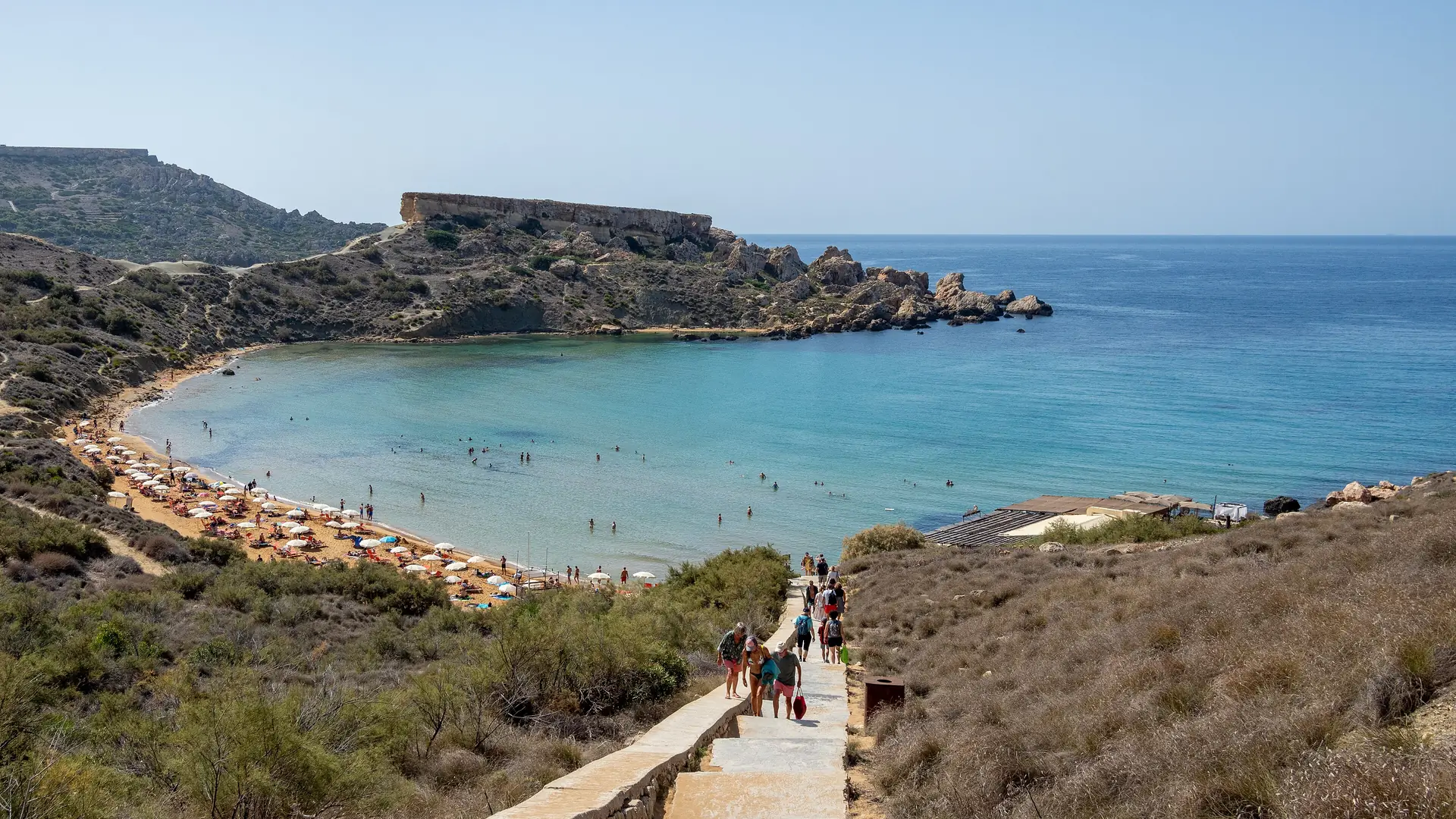
Malta in September runs highs of around 28°C easing through the month, night lows near 20°C, and just 4 wet days carrying 36–40 mm of rain in total. That last figure is the one worth holding onto: September is comfortably the driest of Malta's autumn months, with roughly a third of October's rainfall and a fraction of November's.
The sea reaches about 26°C – within a fraction of a degree of August's annual peak, after a full summer of absorbing heat. Add school holidays ending across Europe, and September delivers peak-season water and warmth at the point when crowds and prices are already falling away. Below: the numbers, how the month splits, and what it costs.
What is the weather like in Malta in September?
Hot, dry and gradually softening. The month starts as an extension of August and finishes as something closer to a warm early autumn, but the change is gentle and the rain stays away for almost all of it.
| Measure | Early September | End of September |
|---|---|---|
| Daytime high | ~29°C | ~26–27°C |
| Night low | ~21°C | ~19°C |
| Sea temperature | ~26°C | ~25°C |
| Sunset | around 19:30 | around 18:45 |
Rainfall totals only 36–40 mm across roughly 4 wet days in September, which makes it one of the driest months in the Maltese calendar and the single biggest practical argument for choosing it. You can plan a boat trip, a beach day or an outdoor dinner three weeks out and expect it to happen.
The caveat sits at the very end of the month. The first autumn showers become possible in the final week, usually arriving as a short, heavy burst that clears within the hour rather than a change in the season. Our Malta temperature by month page sets September against the rest of the year.
Is the sea as warm in September as in August?
Essentially, yes. The Mediterranean around Malta holds at about 26°C in September, within a fraction of a degree of August's marginal peak of ~26-27°C – because water takes months to gain and lose heat, and the sea is still releasing the energy it absorbed through July and August while the air has already started to cool.
That lag is the whole reason the month works. The sea is warmer in September than it is in June, by a margin of several degrees, despite June feeling like the start of summer and September feeling like the end of it. Swimming is comfortable at any hour, including after dark.
- Sea temperature: around 26°C, within a fraction of the annual high
- Beach facilities: fully open all month, winding down only from October
- Boat trips: full schedules, with the settled seas that make Comino sailings reliable
- Best for: anyone whose trip is built around swimming rather than sightseeing
The best beaches in Malta are all in play, Blue Lagoon boats run at full frequency, and a catamaran or sunset cruise is at its best in the settled September evenings.
Is early or late September better?
The month has two halves and they price differently, which matters more here than in any other month.
The first fortnight is August with slightly better manners: highs near 29°C, the sea at its peak, and rates still carrying summer's premium because European school holidays have not finished everywhere. It is the right choice if you need the hottest, most settled conditions.
The last fortnight is the value window. Once the holidays end, demand drops while the sea is still around 25°C and the days still reach the mid-20s. Hotel rates fall, restaurants free up, and the beaches stop competing for space – all before the weather has meaningfully changed.
If your dates are flexible and the trip is not tied to a school calendar, aim for the third or fourth week. It is the closest thing Malta has to a free upgrade.
September or October: which is the better trip?
These are Malta's two strongest shoulder months and they suit different holidays. The gap between them is larger than the four weeks separating them suggests.
| Measure | September | October |
|---|---|---|
| Daytime high | ~28°C | ~24°C |
| Night low | ~20°C | ~18°C |
| Sea temperature | ~26°C | ~24°C |
| Wet days | ~4 | ~9 |
| Prices | Falling from August peak | Low season |
September wins on weather and water; October wins on price and on walking comfort. If the trip is built around the beach and the boats, September is the better month and the extra cost is buying you something real. If it is built around Valletta, Mdina and the temples, October's cooler air is easier on the legs and the hotel rates are lower again.
The one week that beats both is the last in September, which keeps the warm sea while the crowds and rates have already dropped.
Is Malta worth visiting in September?
For most trips, it is the best month of the year. The decisive shift happens in the first fortnight, when school holidays end across Europe and demand falls while the weather does not. You get August's conditions without August's competition for a sunbed, a restaurant table or a Blue Lagoon boat.
The trade-offs are modest. Early September is still genuinely hot – high 20s with strong sun makes midday sightseeing hard work – and the last week carries a small chance of the first autumn rain. Neither is a reason to pick a different month.
Our best time to visit Malta guide singles out late September as the year's sweet spot, and the numbers above are why.
What is there to do in Malta in September?
Everything, which is not true of any other month on the calendar. September is the only window where the water is at its best and the air is cool enough to walk a city in.
- Beaches and swimming – the sea near its annual peak at 26°C, with facilities still fully open
- Comino and the Blue Lagoon – settled seas, reliable sailings, and fewer boats than August
- Valletta, Mdina and the temples – comfortable from mid-month once the worst heat eases, and best before 11:00
- A Gozo day trip – quieter ferries and roads than in high summer
- Village festi – the summer festa season runs into early September in several villages, with brass bands and fireworks
The full things to do in Malta guide has the entry prices and opening hours. One scheduling note: the heat still peaks between 12:00 and 16:00 in the first half of the month, so front-load the walking and save the afternoons for the water.
What does September cost, and what should you pack?
September prices sit between the August peak and the true low season, and they fall noticeably as the month goes on. The first week still carries summer rates; by the last week you are paying something close to October's. Our is Malta expensive guide sets a realistic daily budget, and the best hotels in Malta list covers where the value is.
Book the popular boat trips and Sunday lunches ahead in the first fortnight – September is popular with people who have worked out that it is the best month, so the good operators fill up.
Packing is straightforward summer, with one addition:
- Light clothes and swimwear – daytime highs near 28°C for most of the month
- Strong sun protection – the September sun is still fierce, particularly on a boat
- A thin layer for evenings – nights ease from 21°C to about 19°C across the month
- A packable waterproof – only worth the space if you are travelling in the last week
Featured image: Rhododendrites / Wikimedia Commons / CC BY-SA 4.0