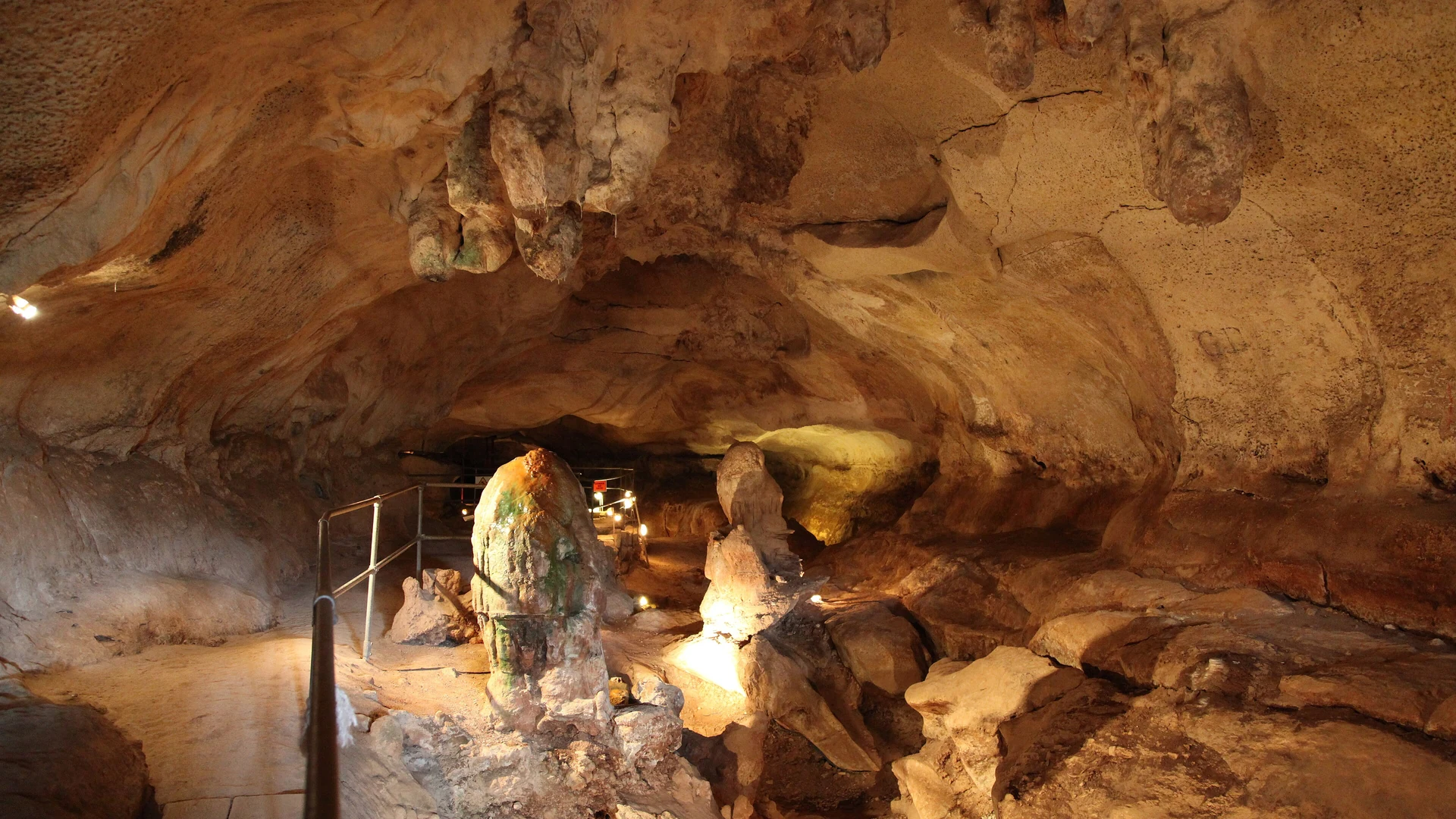
Għar Dalam – "Cave of Darkness" in Maltese – holds the bones of dwarf elephants, hippos, bears and deer, packed into sediment layers going back 500,000 years. It sits near Birżebbuġa in south Malta, comes with a small museum of the actual excavated bones, and takes about an hour to see properly.
The ticket is €6.50 for adults and also covers Borġ in-Nadur nearby, and the one thing to get right is the day: Għar Dalam opens Tuesday to Sunday and closes on Mondays. Below: what the ticket buys, how much of the cave you actually walk, and how it fits a south Malta day.
Malta: Prehistoric Temples Tour
Five hours linking Għar Dalam with Ħaġar Qim and Mnajdra, with hotel pickup and all entrance fees included. The reason to book it is the driving: these three sites are close together but awkward to connect by bus, and the tour turns that into one pickup.
- Għar Dalam Cave & Museum, Ħaġar Qim and Mnajdra
- Hotel pickup and drop-off
- All entrance fees included
What does it cost, and when is it open?
A combined Heritage Malta ticket covers Għar Dalam and Borġ in-Nadur: €6.50 for adults, €5.00 for youths, seniors and students, €4.00 for children aged 6–11, and free for infants aged 1–5. No booking is needed.
- Open: Tuesday to Sunday, 09:00–17:00
- Closed: Mondays, all year
- Last admission: 30 minutes before closing, the standard Heritage Malta rule
- Also closed: 1 January, Good Friday, and 24, 25 and 31 December
- Free parking: directly at the site entrance
The Monday closure is the one that catches people, because most of the south Malta circuit around it – the temples, the Blue Grotto, Marsaxlokk – runs seven days a week.
How much of the cave can you actually walk?
This is the question the photographs never answer. Għar Dalam is 144 metres long, and only the first 50 metres are open to the public.
Heritage Malta gives two reasons, and the first is the more interesting: the deeper sections shelter a rare endemic woodlouse found nowhere else, and the inner cave also has low ceilings and slippery ground. So the closure is conservation first, safety second – not a rope thrown across a corridor for no reason.
What you get in those 50 metres is a lit, walkable path with the sediment layers exposed in cross-section on the walls, labelled to show which animals came out of which stratum. It is not a stalactite cave and it does not try to be. The interest is in reading half a million years of accumulated animal life stacked up in front of you.
The temperature inside stays noticeably cooler than outside, which is a relief in July and worth a light layer in winter.
The bones, and how they got there
Long before humans reached Malta, a land bridge connected the islands to Sicily and mainland Italy. Animals crossing it fell into the cave or sheltered there, and their bones built up in the sediment over hundreds of thousands of years.
Excavations from the 19th century onwards turned up dwarf elephants, dwarf hippopotamuses, brown bears, wolves, foxes and several species of deer – the dwarf species having evolved smaller bodies in response to limited island food supply. The oldest material dates to roughly 500,000 years ago.
The cave also holds the earliest evidence of people in Malta: pottery and worked animal bone in the upper layers, dating to around 7,400 years ago – the Neolithic population whose descendants built the megalithic temples up the road.
The museum
Small, and better than small usually implies. The exhibits are the real excavated bones rather than casts: a dwarf elephant skull is the centrepiece, alongside hippo teeth, deer antlers and smaller mammal remains, labelled in English and Maltese.
A separate display covers the Neolithic human presence and links the cave to the temple-building culture, which is genuinely useful context if the temples are your next stop. Allow 20 to 30 minutes here, then 20 in the cave.
Fitting it into a south Malta day
Għar Dalam sits between Marsaxlokk to the east and the temples to the west, which makes it a natural first stop rather than a detour. Everything below is within about 15 minutes' drive.
- 09:00 – Għar Dalam at opening, museum then cave
- 10:30 – Ħaġar Qim and Mnajdra, mid-morning before the heat
- 12:30 – the Blue Grotto for the boat, best before the light goes off the water
- Alternative – swap west for east and pair the cave with Marsaxlokk, 10 minutes away, for the Sunday fish market
By car it is about 25 minutes from Valletta. Buses to Birżebbuġa exist but connections are thin, which is the main argument for either driving or letting a tour handle it.
For the wider picture of how these sites relate, the Malta megalithic temples guide covers everything from Ġgantija to the Hypogeum.
Is it worth it?
For an hour and €6.50, yes – with a caveat. Għar Dalam rewards curiosity rather than spectacle. If the idea of standing in front of a wall of stratified time appeals, it is one of the more quietly remarkable things on the island, and it is rarely busy.
If you want the visual payoff of the temples or the Blue Grotto, this is not that, and you should treat it as the opening act rather than the main event. Research is still active here – Heritage Malta published new work on the cave's fossils and stratigraphy in 2025 – which tells you something about how much the site still has to give.
Featured image: Frank Vincentz / Wikimedia Commons / CC BY-SA 3.0