Malta in January runs daytime highs of 15–16°C, night lows of 9–10°C and roughly 95–100 mm of rain – the wettest month of the Maltese year, sharing that title with December. It is also the dimmest: Malta averages about 5.5 hours of bright sunshine a day in January, the lowest figure of the twelve months, against roughly 11 hours in August.
What January buys you is the emptiest and cheapest version of the islands. Valletta, Mdina and the Three Cities are at their quietest of the year, and hotel rates at their lowest once the short New Year spike has passed. The sea sits at about 16°C, which rules out swimming for all but the committed – so this is a city break with mild weather attached, not a beach holiday in disguise.
What is the weather like in Malta in January?
Mild, wet in bursts, and short on daylight. Nothing about a Maltese January resembles a northern European one: frost is effectively unknown, and the daytime figure is closer to a British April than a British January.
| Measure | January |
|---|---|
| Daytime high | ~15–16°C |
| Night low | ~9–10°C |
| Sea temperature | ~16°C |
| Rainfall | ~95–100 mm |
| Bright sunshine | ~5.5 hours a day |
| Sunset | 16:59 on 1 January, 17:28 on 31 January |
On how many days it actually rains, the records disagree sharply: Malta's long-term Met Office series gives January about 15 rain days, while Climates to Travel puts it at 10. That gap is largely a threshold problem – what counts as a "rain day" differs between registers – so treat the honest answer as somewhere between a third and a half of the month.
More useful than the count is the shape of it. Maltese winter rain arrives as short, heavy bursts, often an hour of downpour followed by clear sky, rather than the all-day grey that the same rainfall total would produce in Manchester. A light waterproof and a half-day of flexibility in your plans absorbs almost all of it.
Our Malta temperature by month page sets these numbers against the rest of the year, and best time to visit Malta covers how January compares on price and crowds.
How does January compare with December and February?
The three winter months are close enough on temperature that the weather is not what should decide between them. What separates them is rainfall, daylight and what is happening in the calendar.
| December | January | February | |
|---|---|---|---|
| Average day high | 16°C | 15–16°C | 15–16°C |
| Average night low | 11°C | 9–10°C | 9–10°C |
| Sea temperature | 17–18°C | ~16°C | ~16°C |
| Rainfall | 85–110 mm | 95–100 mm | ~60–65 mm |
| The draw | Christmas market, NYE | Lowest prices | Carnival |
December has the events and the price spike to match – Valletta's Christmas market and a New Year's Eve that draws tens of thousands. February is drier by roughly a third and has Carnival. January has neither, which is exactly why it is the cheapest of the three.
It also has the least daylight of the three in usable terms. Sunset climbs from just before 17:00 on 1 January to 17:28 by the end of the month, so an effective sightseeing day runs from about 08:00 to 16:30 in the first fortnight. Front-load the ticketed sights; leave the wandering for the last hour of light.
Can you swim in Malta in January?
Not comfortably. The sea around Malta sits at about 16°C in January, with published figures ranging from 15°C to 17°C depending on the source and the year. That is cold-water swimming territory: fine for a short, bracing dip if you are used to it, unpleasant for everyone else, and nothing like the 26°C the same water reaches in August.
Beach infrastructure reflects that. Lidos, kiosks and lounger hire are shut across the winter, and Comino boat trips largely pause until spring, so the Blue Lagoon is not a realistic January plan. The one water activity that keeps going is diving – the wrecks and caves are dived year-round in a thicker wetsuit, and the operators run through the winter.
Is Malta worth visiting in January?
Yes, on one condition: come for the towns, the food and the value, and treat any sun you get as a bonus. At 15–16°C, Valletta is far better on foot in January than at 35°C in August – the capital is barely 1 km end to end and almost entirely steps and polished limestone, which the summer heat makes punishing.
The trade-offs are worth stating plainly rather than glossing. It is the wettest month, the darkest month, and the sea is off the table. Some older Maltese apartments and guesthouses are built to shed summer heat rather than hold winter warmth, so check that yours has working heating before you book.
Against that: the headline sights have no queues, restaurants take walk-ins, and the islands feel like they belong to the people who live there. For a first trip built around history and towns, January is genuinely underrated.
What is there to do in Malta in January?
Everything that does not need a boat or a beach, which is most of the island's appeal.
- Valletta on foot – St John's Co-Cathedral, the Grand Harbour views and the Baroque grid, at their emptiest
- Mdina and Rabat – the walled city is at its quietest all year once the coach traffic stops
- The Three Cities – compact enough to suit a short winter day
- The megalithic temples – Ħaġar Qim and Mnajdra sit under protective canopies, so rain is not a write-off
- Museums and long lunches – the wet-weather backup, and Maltese cooking is at its best in the cold months
The wider things to do in Malta guide has entry prices and opening hours for all of it. One January-specific note: winter opening hours are shorter at several state-run sites, so check times the day before rather than turning up at 16:00.
What does January cost, and what should you pack?
This is the month's real argument. Outside the New Year peak, January carries the lowest flight and hotel prices of the Maltese year – it is the month to book the hotel you could not justify in August. Our is Malta expensive guide sets a realistic daily budget, and the best hotels in Malta list shows where the winter rates actually fall furthest.
Pack for changeable rather than cold. Days at 15–16°C do not need a coat; nights at 9–10°C do need a jumper, so layers carry the trip.
- A light waterproof – for short heavy bursts, not all-day drizzle
- Comfortable walking shoes – January is a walking month, and wet limestone is slippery
- A warm layer for the evenings – the drop after sunset is sharper than the daytime figure suggests
- Sunglasses – the bright spells between showers are genuinely bright
- Swimwear – only if you are a cold-water swimmer or booked on a dive
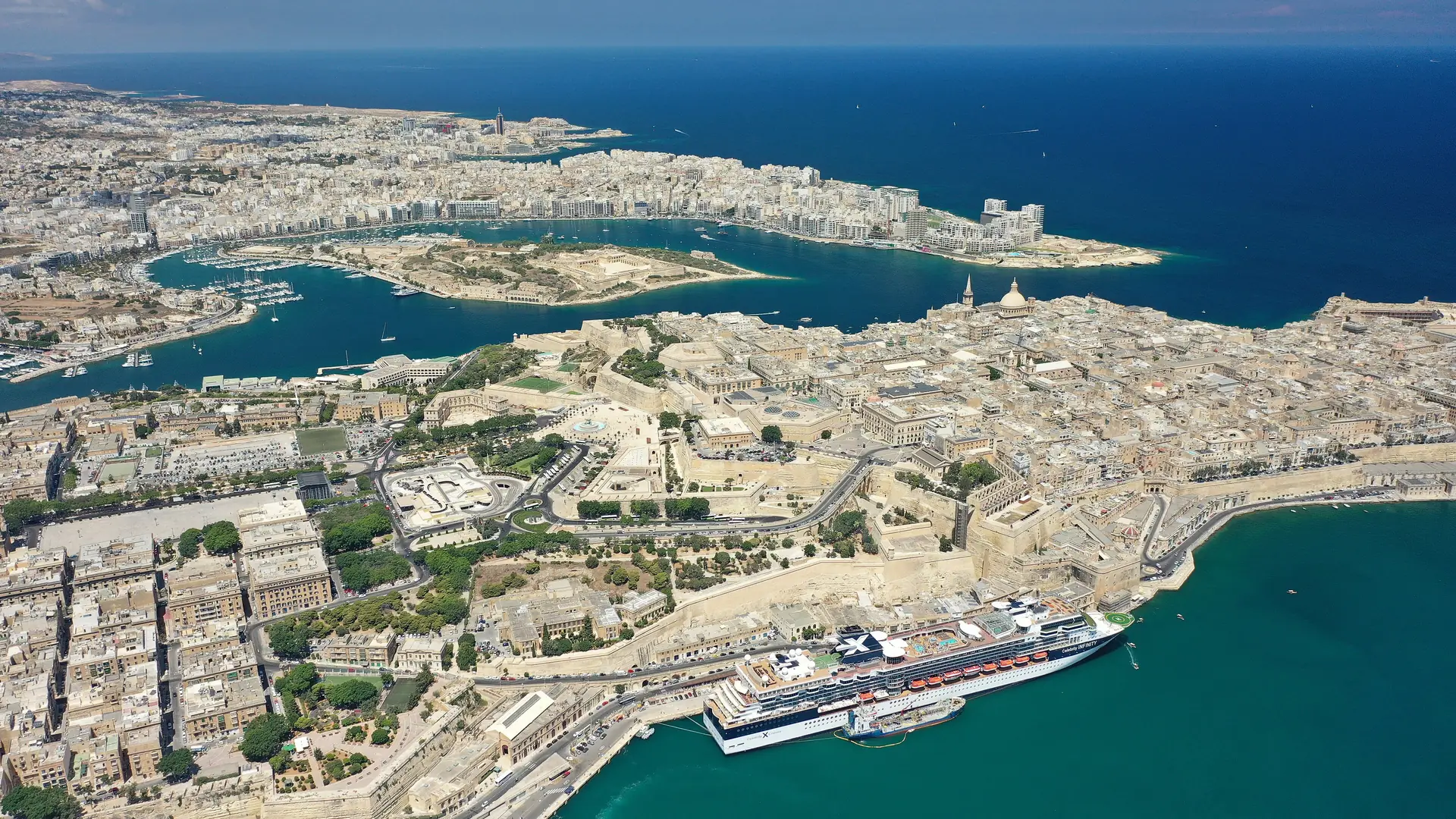
Featured image: Jonathan Mercieca / Wikimedia Commons / CC BY-SA 4.0